Friday, November 27, 2015

Of Syria, The Dark Knight and Girard


The recent terrorists attacks on Paris have caused alot of controversy. I am very troubled by these developments and wanted to say something. As I tend to focus on movies and popular entertainment on this blog I decided to write about this issue by making an analogy to The Dark Knight and, in particular, by applying the writings of French philosopher/literary critic Rene Girard to both the movie and to this current crisis.

Disclaimer: I don't claim to be an expert on Girard's writings nor do I fully subscribe to his theories. I'm also not aware that his writings had any direct influence on Cristopher or Jonathan Nolan when they wrote the screenplay for The Dark Knight. My intention with this article is to use his writings to challenge people to think a little deeper about this issue. It's not meant to proselytize and or to offend anyone.


According to Girard all history can be boiled down to a series of conflicts springing from what he calls mimetic rivalry. These conflicts come to a head with the victimization of some innocent individual or group whose death is perpetuated by the rival parties. The death of this victim puts an end to the conflict. Because the involved parties deny the innocence of the victim in order to justify their actions this is known as the scapegoat mechanism. This occurs multiple times in the Dark Knight,when the Joker demands the death of some victim (Batman, Coleman Reese, and the people on the barges) in order to stop him from killing people. Notably this is forestalled all three times. Once because of the ultimate good conscious of the people on the barges, once because of Batman's intervention, the other time because of the Harvey Dent's sacrifice. This sacrifice once again recalls Girard's writings, in this case his assessment of Christianity. For Girard Christ is the one figure in history to subvert the scapegoat mechanism. Like so many other victims he is sacrificed to bring about peace under the pretext of a supposed guilt (blasphemy and rebellion against Caesar). However, rather then accepting this lie, the gospel writers proclaim Christ's innocence and his willingness to be sacrificed, thus attacking collective ignorance and destroying the myths that had shaped society up to that point. Harvey Dent (and at the end of the film Batman himself) follows Christ's example by allowing himself to be sacrificed for the greater good. The key difference of course, is that each of their sacrifices is based on a lie which brings us again back to Girard. If Girard is right and Christ revealed the lie behind the violent sacrificial order of society why hasn't this order come to an end. Girard says that this hasn't occurred because truth requires a receptive listener in order to have a real impact and the masses of men are not receptive to the truth. The people of Gotham (accepting those on the freighter) do not appear to be receptive to the truth either.


So what does this have to do with the crisis in Syria? Fearful of another terrorist attack like the one that occurred in Paris many want to deny the entry into our country of hundreds of innocent victims because some of them might be terrorists. Some justify this by claiming that the Muslim religion is inherently violent and those who profess it are inherently dangerous. Others want to ignore the conflict altogether and stand by while innocent people are slaughtered because its none of our business and the middle east will always be a violent place so why bother. In both cases sweeping generalizations are used to justify abandoning innocent people in need. Meanwhile, the slaughter continues. Have we learned anything from Christ's sacrifice? A sacrifice that was performed, by the way, just as much for those who hated Christ and wished him dead as those closest to him? Or are we, like the people of Gotham, motivated more by fear than reason? Are we all to willing to feed the innocent to the dogs as long as we ourselves aren't put in  harm's way?

Tuesday, November 17, 2015

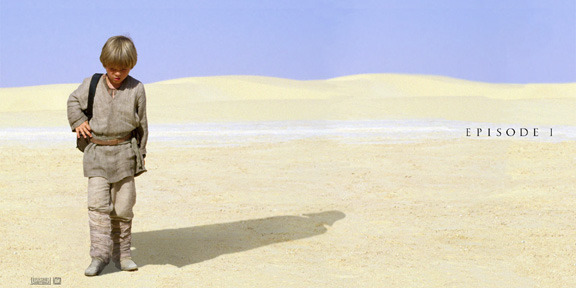
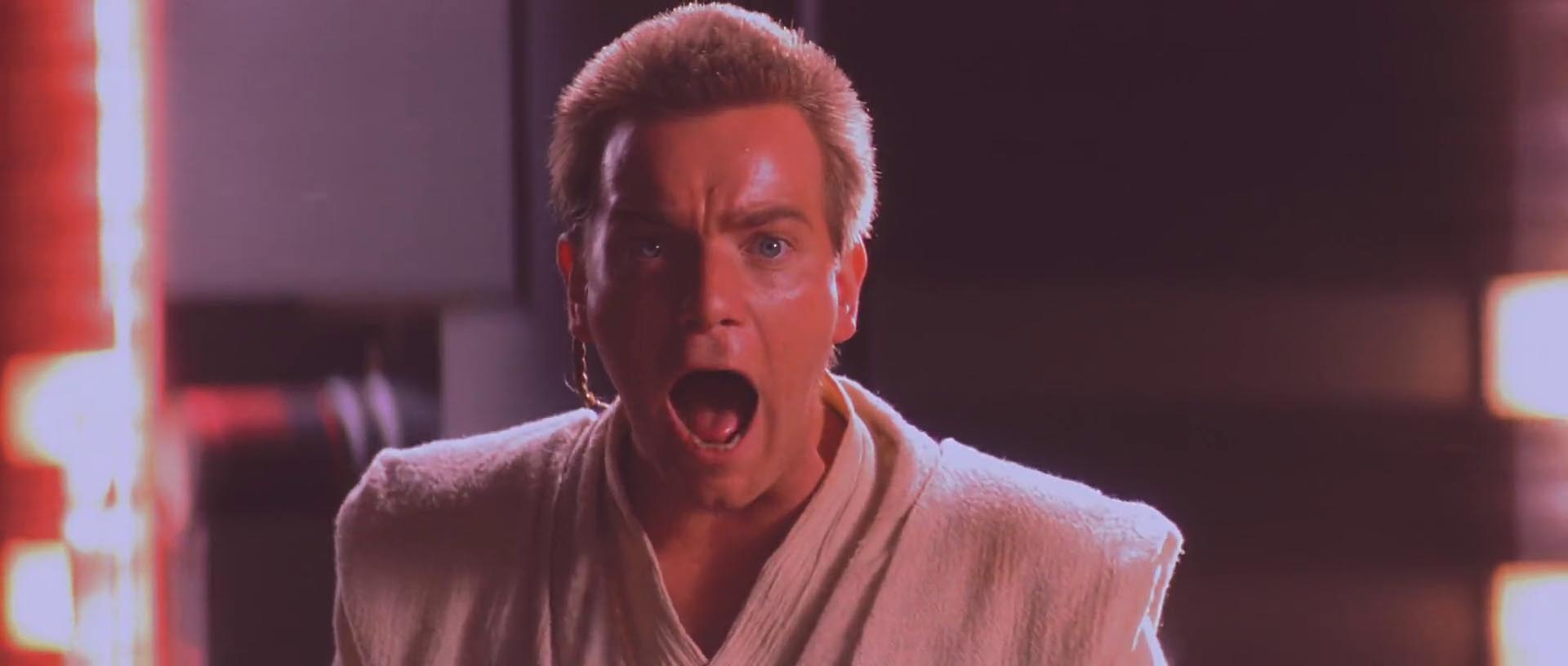
Star Wars: The Phantom Menace Review

    Well I'm back (again)! With the imminent release of Episode 7 I have been re-watching the first six Star Wars films. Since my very first review (though not my first post) on this blog was for Revenge of the Sith I thought this would be a good time to go back and review the first prequel. I would like to try and post more regularly for the time being, at least a few times a month, but will see how it goes...


    The Phantom Menace is a film I feel somewhat reluctant to review as so many others have picked it apart that I'm not sure if I have anything new to add. However there are certain things that stuck out to me in my most recent viewing, so I'm going to try to present my own personal perspective on this as much as possible without rehashing many of the common complaints most people have with it.


    The biggest problem this movie has is it's badly written characters. You would think that Obi Wan and Anakin's relationship would be the focus, but Obi Wan has almost nothing to do here other than spout expository dialogue. The few character moments he does get are with Qui Gon and not Anakin. In fact I don't think they speak to each other even once in the entire film. This becomes especially problematic in later installments as their relationship is so crucial to the saga as a whole. Anakin himself has is pretty much reduced to a savoir stereotype. He's a kind of child prodigy capable of building his own protocol droid and pod racer. With that said, he does have a few genuine character moments. In one scene some of Anakin's friend's (at least I think there his friends) taunt him about his rather low prospects for winning the pod race. This is basically your classic underdog scenario. It might work ok if it wasn't for the rather poor acting from the kid's in this scene, though I do think it create's a little sympathy for Anakin and increases the investment in the pod race slightly. The other important scene is where he leaves his mother. Again this works ok, thanks in no small measure to John William's score and also to Pernilla August's performance, but the film hasn't done enough to make me care about Anakin for it to move me very much. Then there's Qui Gon Jin. Now I like Liam Neeson as much as the next guy but Qui Gon is not a very well written character. His only noticeable trait is his occasional stretching of the rules. He and Obi Wan's relationship is reduced to him giving out generic sagely advice and Obi Wan occasionally making a dry joke like "the negotiations were short". Finally there's Padme. In some way's she actually the most developed character, she clearly feels alot of responsibility for her people but seems to lack the experience to really effectively lead them. She also goes through an arc of sorts, gaining a certain amount of humility through her experiences on Tatooine. With that said, Natalia Portman's performance is really stiff and lifeless. Her range of emotions are basically stoic, vaguely cheery, and pouty. As a result of this her character is not ultimately very likable. As far as her relationship with Anakin goes it comes of as more creepy than anything considering how much younger Jake Loyd was than Portman (eight years to be precise).

     The other big problem The Phantom Menace has is the way it's shot and edited. If I learned one thing from my most recent viewing it's how sloppily edited this film is. As shown in the video below, the transitions between scenes are particularly bad. Many scenes end with a character saying a line of dialogue and the camera awkwardly holding on them for a second or two before a wipe to the next scene. In addition to this many scenes, particularly those involving the Trade Federation, are really brief, giving the film a rather disjointed feel. Another result of the sloppy filmmaking is that most of the action scenes lack any tension. This is partly because I'm not invested in the characters or the story. More importantly though these scenes aren't set up well. Most of them occur rather at random. The first light-saber battle happens when Darth Maul attacks Qui Gon as he's about to board the ship. I have no idea why he choose this specific moment instead of attacking him when he's more isolated in the middle of the desert but it's probably because the writer (aka George Lucas) needed to give him and Anakin a quick and easy escape route. This is rather typical of the action scenes in this film, they come out of nowhere and end quickly with little or no real threat to the characters involved. Another issue is that, half of the time, the characters act really nonchalant during these sequences, like they don't really care. The only two sequences where these problems aren't present are the pod race and the final battle, though even these scenes have some major problems. The climax in particular is way overstuffed jumping back and forth between four different action scenes with very little connecting threads between them.


    I could go on and on about the problems with this film. As many people have mentioned the political machinations are confusing and boring, though I think they could have worked if they were better explained and presented with better dialogue and more lively shooting and editing. I won't even get into Jar Jar or midi-chlorians but suffice to say that one is incredibly irritating and adds alot of really low-brow, childish humor to the film and the other reduces the mystical force to a measurable scientific quantity. I also think its telling that both elements were greatly reduced in the other prequels.

 
    So is there anything I like in this movie? Not much. Ewan Mcgregor was a good casting choice even if he has nothing to do. Ian Mcdiarmid is appropriately menacing as Palpatine/Darth Sidious. The duel of fates is really cool, if a bit disconnected from the rest of the climax. Once he is finally allowed to go all out, Ray Park gives a energetic physical performance as Darth Maul. There  are some cool sets and the costume and makeup design is top notch. Ben Burt's sound design is great as always. I do like the pod race even if it is basically CGI Ben Hur. The CGI itself holds up better than I thought it would, though the excessive use of green screen is really off putting.  And of course John Williams score is awesome.

    Unfortunately none of this is enough to save the movie, so The Phantom Menace remains a clunky, tedious mess albeit one with lot's of eye candy and a killer soundtrack.

Score: 4/10


Sunday, April 12, 2015

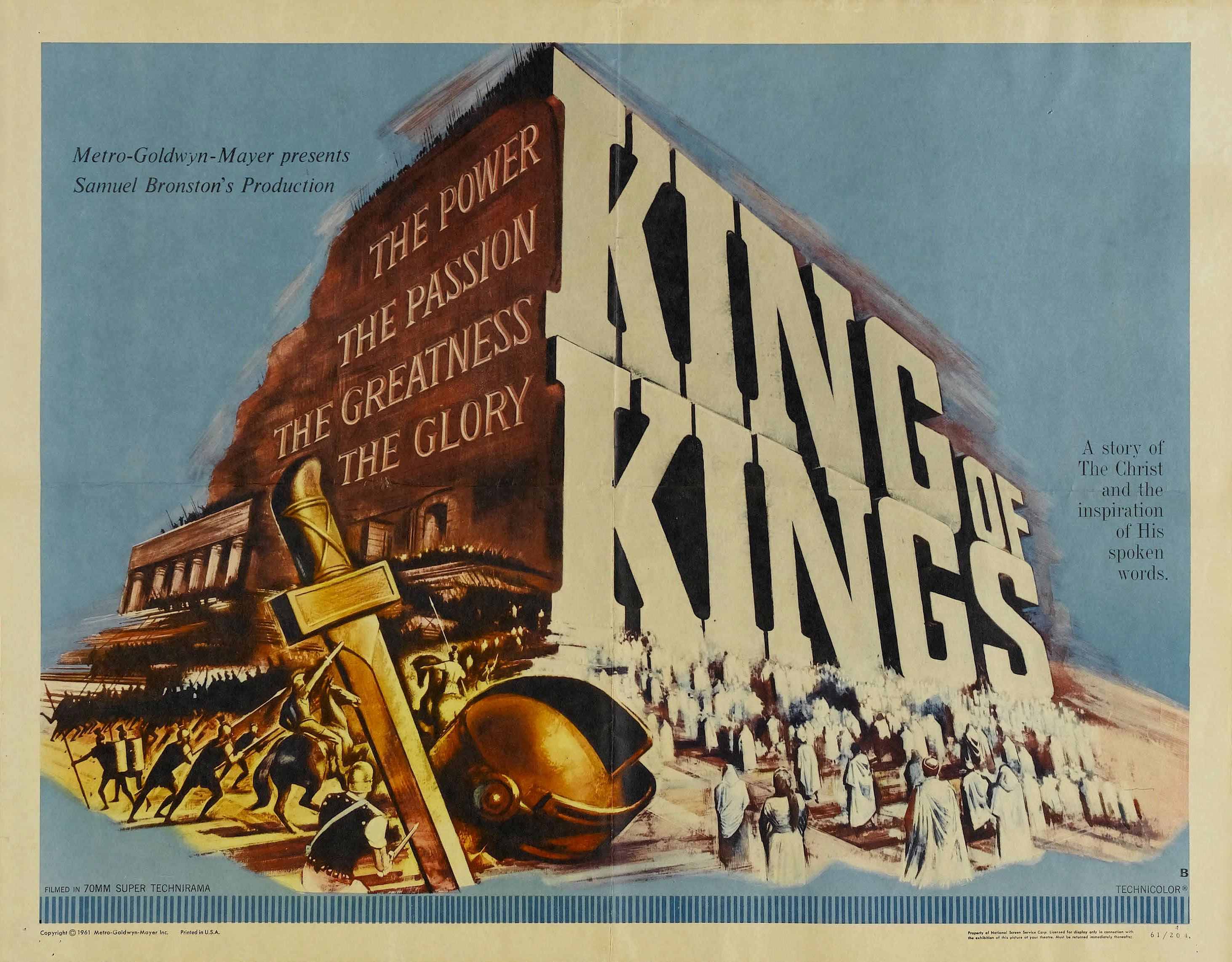
Lent Reviews Week 6 - Kings of Kings


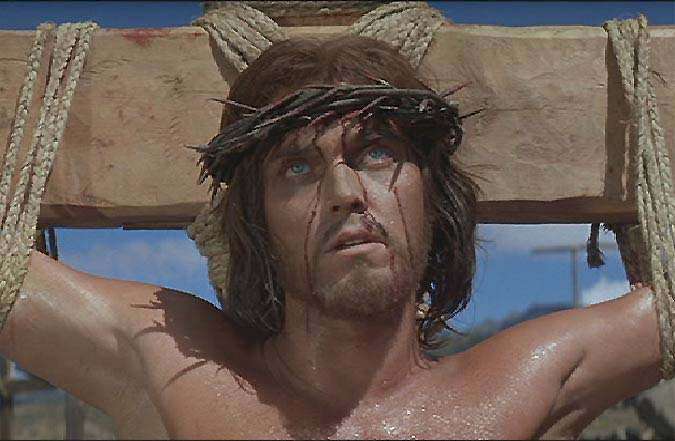
  King of Kings was released in 1961. It was directed by Nicholas Ray (Rebel Without a Cause) and stars Jeffrey Hunter as Jesus. The film tells the story of Jesus life, from his birth to his death and resurrection.
   Unlike other films about Christ, King of Kings focuses more on supporting characters than on Jesus himself. It especially focuses on the political conflict involving Herod Antipas (Frank Thring), Pontius Pilate (Hurd Hatfield), John the Baptist (Robert Ryan), Barabbas (Harry Guardino), and also the Jewish Sanhedrin. Barabbas is a zealot and Pilate is concerned about his insurrection.  Meanwhile Herod is troubled because John the Baptist accuses him of adultery for taking his brothers wife as his own. Barabbas on the other hand sees John's influence on the people and hopes to win him over to his side. Caiaphas and the Sanhedrin seek to cooperate with Pilate in order to prevent bloodshed. Judas Iscariot (Rip Torn) is in league with Barabbas and once Jesus enters the scene tries to persuade Barabbas to go to Jesus for support. Barabbas is not impressed by Jesus however, as He only talks of peace. Meanwhile John is arrested by Herod, further inciting Barabbas and his followers. John looks for Jesus' coming and in prison hopes to here from His own lips that Jesus is the Messiah. In addition to this there are also scenes focusing on Peter (Royal Dano) and Mary Magdalene (Carmen Sevilla). Peter's scenes are mainly there to serve as a counterpoint to Judas, as both men betray Jesus in a way but, while Judas ultimately despairs and kills himself, Peter repents. Mary Magdelene's scene's also serve as a kind of contrast with Salome (Brigid Bazlen), Herod's stepdaughter. One is guilty of adultery and the other with indulging a man's lust. Each one has an encounter with a religious figure (Jesus and John the Baptist respectively) that call them to repentance. Salome rejects this while Mary embraces it.
  The film does not do a perfect job juggling all of these characters. Peter's character arc, for instance, never feels complete as his threefold confession of love to Jesus after the Resurrection, counterpointing his threefold denial, is omitted. I also felt confused about Barabbas' arc. How does Judas' and Jesus' death affect him? Does he decide to embrace Jesus' way of peace or does he continue in his violent ways? Fortunately, other characters fair better. Judas' motivations are very well established and his end feels appropriately tragic. Herod and Pilate both ultimately fall to their lust and arrogance. John is vindicated in his mission before his martyrdom. One character I haven't mentioned is the Roman Centuriun Luscious (Ron Randell), early in the film Herod's father Herodias orders him to see to the slaughter of the innocents, a task he is not entirely comfortable with. Later he encounters Jesus as a young boy in Nazereth and starts to suspect His greater destiny when he learns that he was born in Bethlehem, and therefore must have escaped Herodias' wrath. He continues to have encounter's with Christ throughout the film, finally being converted at the end despite telling Pilate in an earlier scene that the things he's seen serving for Rome have shown him "that there can be no God."
  Jesus himself feels somewhat unapproachable in this film. He influences those around him and ultimately brings about the redemption of man but you never get to know him as a person (and Jesus is a Person). I don't necessarily disagree with this sort of second hand approach to telling the story but in this case I think that more focus needed to be placed on Jesus in order to hold the film together better. As it is, there are just too many characters and none of them ultimately feel like the main focus of the movie.
  With that said King of Kings is not a bad film. There is still alot of interesting character study, even if it's not focused. Some of the performances are pretty good, particular Robert Ryan's. Of course being an old school epic there are alot of great visuals, the sermon on the mount being particularly impressive. Finally, Miklos Rosva's put's out another amazing score, serving as an interesting companion piece to his score for Ben Hur, from which he reuses certain themes.

Score: 8/10

Saturday, April 4, 2015

Lent Reviews Week 5: The Agony and the Ectasy

Ok I guess you should just resign yourselves to reading these a week late at this point...

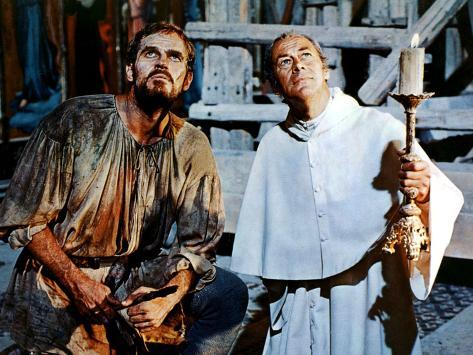
  The Agony and the Ecstasy was released in 1965. It stars Charlton Heston and Rex Harrison and was directed by Carol Reed (The Third Man). In it Pope Julius II (Harrison) commission Michelangelo Buonarroti (Heston) to paint the Twelve apostles on the ceiling of the Sistine Chapel. Not wanting to tie himself to such a monumental task because he considers himself a sculptor, Michelangelo at first flees, invoking the wrath of the Pontiff. He finally returns with his own, much grander, proposal for the ceiling: to paint a visual representation of humanity's need for salvation, portraying nine scenes from the book of Genesis, twelve prophetic figures, and the ancestors of Christ. Julius approves his plan and as the work carries on over the course of four years the two men continue to clash.
  I first saw this film as a young child. I remember the impression it made on me about the difficulty of work that Michelangelo undertook, as well as the idea of artistic integrity. Michelangelo doesn't want to make someone else's idea of art but is compelled to follow his own inspirations. The film plays with the idea of censoring art and also of the unique vocation of the artist. I find this exchange between Michelangelo and his rival Raphael particularly interesting.
Raphael: We are harlots always peddling beauty at the doorsteps of the mighty.
Michelangelo: If it comes to that, I won't be an artist.
Raphael: You'll always be an artist. You have no choice.

  The main focus of the film is the often antagonistic relationship between the two main characters. Julius and Michelangelo are both vain and very egotistical people. Michelangelo resents the fact that the Pope is making him do this, often without being paid. Julius, on the other hand, is impatient to have the work done. One of the things I remembered from seeing it as a kid was Julius continually asking Michelangelo "When will you make an end?" to which he replies, "When I am Finished!" There is also a contrast between their relationship with, and perception of, God. In one scene Michelangelo finds Julius in the chapel late one night inspecting his work. As he looks at Michelangelo's depiction of the creation of Adam he asks him "Is that truly how you see Him, my son? Not angry, not vengeful but like that? Strong, benign, loving?" Michelangelo replies, "Well, he knows anger too, but... the act of creation is an act of love." The Pope, in this scene, is doubting his own resolve, while Michelangelo is more determined to finish the ceiling than ever. There different viewpoints, I think, reflect their relationship with God at this point in the film. 
The ceiling was actually recreated for the film by an Irish painter!
   The film is fairly faithful to actual events though there are some discrepancies. Michelangelo really did leave Rome for Florence, only to be hunted by the Vatican, though he did so for different reasons than depicted in the film. There is no evidence (to my knowledge) that Michelangelo had a relationship with the Contessina de'Medici, this appears to be completely fabricated, as does the crippling illnesses both Julius and Michelangelo experience at different points in the film. Most of these departures are understandable but as a history buff I'm always concerned about Hollywood misleading people. With that said I haven't read the book this was based on and don't know how well researched the book was or how accurate the film is to it.

  The Agony and the Ecstasy is certainly not without its flaws. There's a 15 minute opening scene where a narrator gives biographical information about Michelangelo and his works which, though interesting, seems a little unnecessarily  long. In addition to this there's a point near the end of the film (mirroring an earlier scene where the roles are reversed) where Pope Julius is dying, his attempts to restore the papal states seemingly failed. Michelangelo, who recently has taken to humbling himself before Julius comes in and tells him that he is not going to complete the ceiling. This infuriates Julius and brings him out of his stupor. The film then cuts to years later when the work is finally complete and Julius is now triumphant over his enemies, ending the film. I understand why they did this, as the relationship between Julius and Michelangelo has come full circle at this point and the film wasn't getting any shorter, however it can't help but feel abrupt.
  Despite these pacing issues its still a very worthy film, featuring great performances from both leads, solid direction from Carol Reed, and a stirring score from Jerry Goldsmith (First Blood and Star Trek: The Motion Picture) and Alex North (Spartacus). I would say its definitely worth checking out, especially if your interested in renaissance or Church history.

Score: 9/10

Next Week: King of Kings (1961)

Sunday, March 29, 2015

Lent Reviews Week 4: Noah

Ok so I guess I didn't get both reviews up last week after all...

  Noah was released in 2014. It stars Russell Crow and is directed by Darren Aronofsky. It tells the biblical story of the great flood from Genesis.

  This film sparked alot of controversy among christian viewers as it significantly altered the biblical narrative. I used to be something of a purist when it came to theatrical adaptions of books, plays, true historical narratives, and the like but, more recently, I have laxed this somewhat in this sentiment. In any case I think that its a mistake to lambast a film for biblical accuracy when it is so filled with truly christian values and in line with Catholic moral teaching. Noah is exactly that. Some have accused it of being a environmentalist propaganda piece. Though there are certainly environmental themes in the movie, I wouldn't say that it's overly extreme. Noah and his family are depicted as being vegetarians as dictated by the creator. Though many may not know this, it is actually in line with the biblical narrative which say's that man was not allowed to eat meat until after the flood (see Genesis 9:2). Another thing that's important to remember is that, though God gave the world to man to "fill ... and subdue" we ought to follow his example and be kind masters and stewards of the gift he has given us, as the catechism says "Man must therefore respect the particular goodness of every creature, to avoid any disordered use of things which would be in contempt of the Creator and would bring disastrous consequences for human beings and their environment." Noah reflects this teaching very well, as Noah's love and care for God's creation is contrasted with Tubal Cain's might-makes-right ideology. This comparison is also used to illustrate the film's themes about sin and violence among men. 


  One of the things that shocked viewers the most about the film was Noah's proposed killing of a newborn. This obviously does not happen in the biblical text. But those who things that this is somehow demeaning to the actual man would do well to remember that another, even more revered biblical figure almost did the same thing: Abraham. I can't help but feel that Noah's idea to kill Ila's child was inspired by the story of Abraham and Isaac. The difference being that God directly commended that sacrifice, while Noah is only doing what he perceives (falsely in this case) as being God's will for him. The reason he believes this is that the whole reason for the flood is to purify the earth of sin and man has been tainted by the sin of Adam. Noah believes, perhaps somewhat understandably that man is incapable of doing better and therefore must be destroyed. There is one particular moment where Noah looks up toward the cloudy sky asking God for an answer, but he receives none. In this I can't help but think of Job when he say's "Where then does wisdom come from? ... It is hidden from the eyes of every living thing" (Job 28:20-21) Like Job, and like Noah in the film, we too must discern God's will for us without direct contact with him. Ultimately Noah decides that God is loving and merciful, and wished to give the human race a second chance. And this is the film's main message.

  Another controversial thing in the film is the presence of the Watchers, giant rock giants who were once angels but came to earth to assist fallen man in disobedience to the creators wishes. However these are actually based on the Nephilim as mentioned in Genesis 6:4. This portrayal may not be in line with traditional interpretations of them, however they add a very mythological feel to the film. Indeed the film sets up a really impressive bible-based mythology about creation, the fall, and the great flood. Filmed (partly) in Iceland, the landscape has simultaneously a really new, young look and a wasted, used up feel. It may seem sacrilegious to portray a biblical story in this kind of mythological way but I like to recall the words of C.S. Lewis, "I was by now too experienced in literary criticism to regard the Gospels as myths. They had not the mythical taste. And yet the very matter which they set down in their artless, historical fashion...was precisely the matter of the great myths. If ever a myth had become fact, had been incarnated, it would be just like this.... Here and here only in all time the myth must have become fact; the Word, flesh; God, Man. This is not “a religion,” nor “a philosophy.” It is the summing up and actuality of them all."
  With that in mind I feel very comfortable saying that Noah may be both the best high fantasy since Peter Jackson's Lord of the Rings, and the best biblical epic since Mel Gibson's The Passion of the Christ.

Score: 9/10

Thursday, March 19, 2015

Lent Movie Reviews Year 2 Week 3 - The Killer (belated)

Between school and being sick I've not found time to write a review this past week. As I have this week off  figured I tried writing two reviews, to catch up. The first one being for...

  The Killer was released in 1989 and stars Yon Fat Chow and Danny Lee. It tells the story of Ah Jong (Chow, also called Jeffrey in certain dubs), an assassin, who accidentally blinds a nightclub singer named Jennie (Sally Yeh) and, out of guilt, takes on one last job to pay for the surgery to fix her eyes. Police Detective Li Ying (Lee) is tasked to hunter the killer down, but finds himself strangely drawn to him.
  The movie is something of a classic in Hong Kong, where it was made. It is expertly directed by Woo and contains many memorable and very well choreographed action scenes. The story, though somewhat simplistic, is very emotionally involving (even bordering on sappy at times) and the performances are all very solid. The score is kind of typical for an asian action film from this era but the film does memorably make use of the overture from Handel's Messiah during the climax. In other words, it's a really good film. But that's not what I'm here to talk about. Though its not a religious movie (duh) it does have alot of religious imagery and subtext and that is (mainly) what I am going to analyze in this review.


  The most common recurring religious image in the film is the church where the climactic shootout takes place. It is seen for the first time early in the film where Ah Jong waits for his friend Fung Sey (Chu Kong) to give him his next assignment. A priests asks him if he believes in God and he say's that he enjoys the tranquility. Woo, a christian, has said that the church symbolizes "understanding and redemption ... everyone, whether you’re good or bad, can find salvation in the church." This is interesting when applied to the scene after Jennie is blinded, where Ah Jong is having his wounds tended. Ah Jong, at this point, feels great remorse over the mistake he's just made. As his sits in the pew, painfully flinching as bullets are pulled out of his back, he seems to look up toward the altar with hopelessness in his eyes. We return to the church once more for the climax, where it is largely torn apart, it's peace and tranquility destroyed by the violence of men. Woo is also famous for showing doves flying around during his shootouts, a motif he uses for the first time in this film. He's says that the doves represents the hero's soul. So the film has many attractive elements for Christian viewers. 

  Of course there are also religious themes in this film that aren't christian, but rather influenced by the Confucian concept of yi (or righteousness). This concept says that certain actions are inherently right and we have a duty to follow them, regardless of the consequences. This can be seen in the film through the actions of both Ah Jong and his friend Fung Sey who stick strictly to their code, despite the often disastrous results. Both of them believe that it is ok to terminate their targets because they deserve it anyways. Of course this only adds to Ah Jong's consternation when an innocent (Jennie and later a young girl) is hurt in the crossfire. It's Fung Sey's actions, in trying to get the money owed to Ah Jong by Hay Wong Hoi, that ultimately spell doom for both of them. He is driven to do this because Ah Jong spared his life after he was hired to kill him by Hoi. Li Ying, on the other hand, admires Ah Jong's strict adherence to his code and envys his freedom. Li Ying himself is held responsible for the consequences of his actions by his superiors, while the Killer is relatively free to do what his code tells him is right. It should be noted that although following yi can lead to terrible consequences if your morality is warped, Confucianism stresses a proper forming of conscience so that following yi will align with the greater good. What is problematic about yi from a Christian perspective is that actions do have consequences, and these consequences matter. In other words, doing something that is right on its own, liking repaying a debt, can be wrong if it will lead to bad consequences. Despite being a christian, Woo himself has great respect for these principles and sees his film as a kind of "romantic poem" about tragic heroes. Indeed both of the main characters contain many heroic qualities, but because of the corrupt world in which they operate, they are both brought to ruin. Woo's respect for yi may be problematic from a christian perspective but the films portrayal of it's hero's is complex enough to alleviate most concerns. Ah Jong is portrayed as being very regretful of the life he's chosen but it's one that he ultimately can't escape. As he says when picking out a gun for one of his hit's, "Easy to pick up, difficult to put down." In other words the film doesn't necessarily invite us to approve of everything the characters do, only there conviction and loyalty to each other, which is what makes them tragic heroes. 

  There are two scenes in the film however, that could be still considered problematic. One is where Ah Jong shoots Fung Sey, who is dying from his wound so that he can 'die like a man'.This obviously flies in the face of the churches teaching on euthanasia, however I think we can sympathize with Ah Jong's actions in this case, particularly given his own flawed value system, even if we don't approve of them. The other seen is where Li Ying kills an unarmed Hay Wong Hoi to exact vengeance for what he's done. You might have your own opinion on capital punishment but the bible (or at least the new testament) is pretty clear on the immorality of seeking revenge.  Romans 12:19 says, "Avenge not yourselves, beloved, but give place unto wrath: for it is written, Vengeance belongeth unto me; I will recompense, saith the Lord." What makes both acts especially problematic is the somewhat chest thumping way in which they portrayed, and though, as I said, killing Fung Sey has some empathetic elements, Li Ying's actions, quite simply, do not.
  In the end, though The Killer is certainly not without questionable morals, its still a very interesting film and not one without merit, even for a devout Catholic.

Score: 9/10

References:


Journal of Religion & Film: Jon Woo's The Killer and Girard


Salon.com: Gentelman with a gun


Sunday, March 8, 2015

Lent Movie Reviews Year 2 Week 2 - The Scarlet and the Black


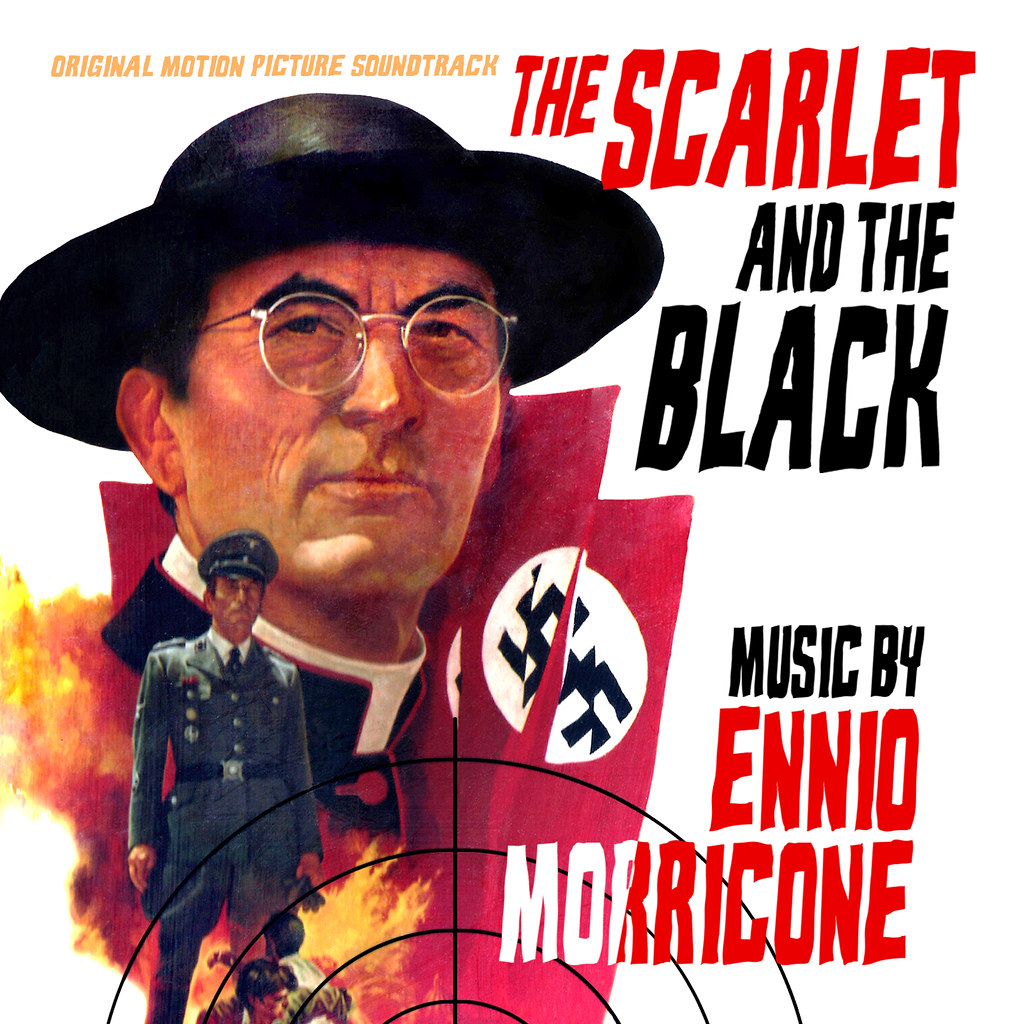
I opted to use this poster from the score as all the decent ones for the film had a rectangular aspect ratio.
  The Scarlet and the Black is a made-for-tv movie released in 1983. It stars Gregory Peck and Christopher Plummer and is directed by Jerry London. It tells the story of Monsignor Hugh O'Flaherty (Peck) who aided Allied escape prisoners during the German occupation of Rome in the Second World War.
 
The Scarlet and the Black is a film I grew up watching. I enjoyed it as a kid and it has held up quite well as an adult. The thing that drives the film is the conflict between O'Flaherty and Lieutenant Colonel Herbert Kappler (Plummer), the head of the German police in Rome. O'Flaherty's charity and concern for others is contrasted with Kapler's arrogance and cold cruelty. Similarly Pope Pius XII's (John Gielgud) benevolent though cautious treatment of O'Flaherty is contrasted with the threatening and iron handed way Kapler's superiors deal with him. Consequently, Kapler feels increasingly desperate in his efforts to round up O'Flaherty's escapees, while O'Flaherty himself is weighed down with trying to choose the best course of action in order to both follow his conscience and preserve the church's integrity. This contrast between their approaches to life, and to their differing world views, is brought to a head in the climax, where Kapler meets O'Flaherty in the ruins of the coliseum and asks him to help keep his family safe from the partisans once the allies enter Rome. The once proud conqueror, brought low, seeks help from his sworn enemy, who must now show himself to be the better man and help his adversary.
  The film is fairly historically accurate, though it does embellish and change around many events.  For one thing many of the other supporting characters name's have been changed (for anonymity I would suppose).  It was not Kappler but Ludwig Koch who asked O'Flaherty for help and O'Flaherty did not meet him face to face. There are other similar incidences, where O 'Flaherty and Kappler are substituted for other characters in order to keep the focus on them. The most notable departure is the portrayal of Pius XII's concern over O'Flaherty's operation endangering the Vatican's neutrality. As far as I know this was not the case. It was probably added to the film to give the protagonist a crisis of conscience, which is an understandable though questionable choice, given the negative light it cast on the aforementioned pontiff. There are other scenes which show him in a more positive light however, which helps me to overlook this flaw to a certain extent.
  The movie was shot on location in Rome and the director uses the location to his advantage. Shots of O'Flaherty strolling through the Vatican gardens dwarfed by St. Peter's statue or of him and Kappler facing off in the coliseum "where your (Kappler) ancestors watched the lions tear the christians to pieces", really add an expressive visual quality to the film. The performances are quite strong all around, especially from the two leads. Morricone's score is sparse but effective and, as always, memorable. In the end The Scarlet and the Black may not be a perfect film but it still holds up incredibly well. As a historical piece I think it could be compared to The Great Escape in that it gives a good overview of the actual story while at the same time embellishing it to make an effective thriller.

Score: 9/10