Sunday, December 17, 2017

Geoff John's New 52 Justice League Retrospective Part 7 (Sunday Evening Cartoons)

Perhaps I should just give up on posting these on time...

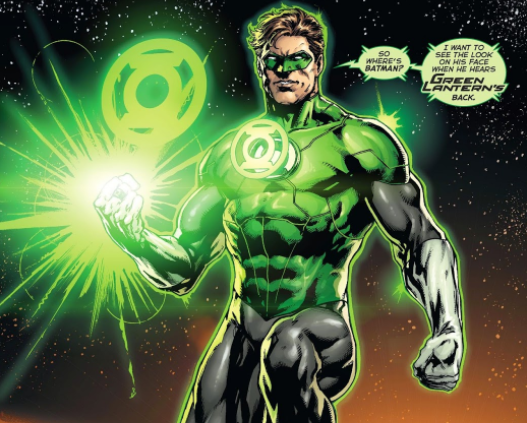
     The Darkseid War was published in two volumes (volumes 7 and 8 of the series proper). It is the final arc from Geoff John's run on the Justice League.

     The Darkseid War starts out with a flashback showing an Amazon named Myrina giving birth to Grail, the Daughter of Darkseid, on Themyscira on the same day that Diana was born. Menalippe, who witnesses this birth, foresees a war between Darkseid and the Anti-Monitor that the child will bring about so she and Penelope try to kill the child. Myrina, however, refuses to let them do this and kills them both, fleeing Themyscira.
   
    Meanwhile Metron relates persuading Darkseid and the Highfather of New Genesis to exchange sons in order to prevent further wars between the two planets. He also recaps the emergence of the original Anti-Monitor and his defeat in Crisis on Infinite Earths along with other major DC crossover's including Flashpoint, the results of which, according to Metron, have not yet solidified. This Anti-Monitor, we learn was the named Mobius was the first to sit in the Mobius Chair. Metron approaches Mobius and offers to undo his curse. He warns him of Darkseid's ambitions but Mobius wants a war with Darkseid so he can destroy him and break his curse, ending the age of the New Gods once again. It is then revealed that Grail is aiding Mobius and she attacks Metron, causing him to flee so he can try to prevent the coming war.

     Back on earth Darkseid's servants, Kanto and Lashina, search for Myrina, finding and murdering anyone who bears her name, Terminator style. Mister Miracle relates his escape from Apokolips. We learn that the exchange of sons did nothing to prevent war with Apokolips and Highfather's son began to search for a means of escape. Eventually breaking out of Darkseid's prison he met Himon, a rebel who inspired him to fight against Darkseid. Darkseid, we learn, is now amassing power to attack earth again and Mister Miracle decides to go to the League for help. He faces Darkseid who thoroughly beats him and is forced to flee.


      The League, meanwhile, is investigating the boom tube opening created by Lashina and Kanto. As they search the scene of Myrina's murder, Grail emerges from inside Flash and takes him out. A fight breaks out between her and the League and she tells Wonder Woman who she is. She then takes Jessica Cruz's power ring and summons Anti-Monitor and an army of shadows. With the rest of the League incapacitated, Wonder Wonder is forced to fight Grail and Mobius on her own. Then Metron arrives and uses his chair to transport the League away.

     While searching for the man responsible for trying to kill Lex Luthor, he and Superman travel to his lab at LexCorp. There, Lex shows Superman his new Kryptonite powered suit, angering him. Superman threatens to kick Lex off of the League but their confrontation is interrupted when Lena shoots Lex and, declaring her loyalty to Darkseid, sends both men to Apokolips using a Boom Tube. Arriving their, Superman revives Lex and cauterizes his wound, informing him of his sister's treachery.
 

     Arriving on Earth, Mister Miracle finds another woman named Myrina murdered and Lashina and Kanto, who are still on the scene, fight him. He teleports away from the fight and encounters the real Myrina. He warns her about Kanto and Lashina and she informs him off her plan to destroy Darkseid by having Grail manipulate a war between him and Mobius. Shocked by this revelation, he refuses to cooperate with her plans and uses his Boom Tube to escape when she tries to kill him.


     On Apokolips, Steppenwolf informs Darkseid that Superman has arrived and pledges to kill him. But Darkseid wants his to destroy his spirit as well as his body. He orders his slaves to kill Superman, offering them their freedom if they so. This will show Superman that Apokolips is a world without hope. He also sends Steppenwolf and Kalibak to capture Grail and Myrina. Superman and Luthor are attacked by hundreds of beings from the slave camps and Superman finds that his powers are fading because of the lack of sunlight on the planet. Luthor flies him away from the oncoming slaves and they are attacked by parademons. Desperate for help Luthor drops Clark into the Fire Pits of Apokolips in order to charge him with solar energy.


      Metron takes the league to the Shazam's hideout, the Rock of Eternity. He tells them to flee earth and save themselves. They, of course, refuse to do this. Wonder Woman uses her lasso to get information about Mobius from Metron. He tells her that he himself knows nothing and she must take the chair in order to obtain this information. She removes him from it and, before it can transport itself away, Batman sits in and is immediately overwhelmed with information. He is still unable to get any information about the Anti-Monitor however. He discovers the origin of Grail and informs the League who are concerned that the chair will permanently alter him. Mister Miracle then teleports in and asks the League to help him persuade Mobius to leave earth. Batman and Green Lantern go to find answers in the multiverse while the rest of the League go with Mister Miracle. The League then confront Grail and Mobius and tell them to leave when Darkseid and his army arrive, summoned by Grail.


     Batman and Hal Jordan visit Earth 3 to see what Mobius did to that world. Jordan wants to return to earth and help Diana and the others but Bruce insists on continuing the search, saying the knowledge is important. They then travel to Mobius' birthplace of Qward and discover that he built the Mobius Chair. He came to see the Anti-Life Equation and was cursed because of it

     Back on earth the war has begun. Kalibak fights with Grail while Mobius fights Darkseid. Darkseid then summons the Black Racer and together they start to beat Mobius down. The Anti-Monitor then uses the Anti-Life Equation, which he reveals to be inside him, to take control of the Black Racer who then bonds with the Flash. With this combined power, the Racer kills Darkseid.

     On Apokolips the Fire Pits have transformed Superman into a dark god and he now wants to kill Luthor. He rips Luthor's suit in half and leaves him to rot on Apokolips. Ardora and the Forgotten People then find Luthor and tell him of a prophecy which said that a human would walk through the ashes if Apokolips after Darkseid's death. This prophecy refers to Superman but Lex claims that he is that man. As a result, Ardora attemps to contain the Omega effect inside Lex to see if he's worthy to claim it's power. He survives the process and becomes the new god of Apokolips.


     Meanwhile, Mobius has reverted to his original form, separating from the Anti-Life Equation which Grail takes. The New Gods call Shazam who also attains Godlike powers. At this point in the story Batman, Superman, Flash, Lex Luthor and Shazam have all essentially become the New Gods. All of them have been altered by this experience, and refuse to give up their new power. Green Lantern, failing to convince Batman to leave the Mobius chair, returns to Oa to fight the a parademon invasion.


     The members of the League still fighting on earth decide to regroup in the face of Darkseid's death. Volthoom attempts to take over Jessica Cruz again but she resists him. Kanto tries to kill Scott Free but is stopped by Barda's arrival from Apokolips. Scott Free then reveals that they're married. Wonder Woman decides to question the Syndicate about Mobius but Steve Trevor informs her they are Level Zero inmates at A.R.G.U.S., so they'll have to break into Belle Reve to question them. Jessica, Barda, Scott and Cyborg teleport away to do this while Diana and Steve go to locate the other Leaguers. Before they can leave, Superman shows up and attacks Steve. Wonder Woman intervenes, using her Lasso to calm Superman down, and he accepts his identity as Clark Kent, restoring him to his normal mental state. Batman then returns to earth and tells Superman that his mental state has only been restored temporarily and that the solar energy from Apokolips is breaking down his cellular structure and will eventually kill him. He then detects that Mobius is returning.

     In the meantime, Jessica, Barda, Scott and Cyborg have broken into Belle Reve and questioned Ultraman, who tells them that Mobius has come to destroy everyone. When they break into Superwoman's cell, Volthoom takes control of Jessica, something which, it turns out, the two former Crime Syndicate members had planned ahead of time. Cyborg tries to hack into the ring and restore Jessica's power but Volthoom reactivates Grid who takes over Cyborg's body yet again. Owlman then arrives, and suggests that the League and the Syndicate work together to stop Mobius.

     The Syndicate claim that they know how to find and defeat Mobius. They want Luthor to give his kryptonite to Ultraman, to restore his powers. The League agree to this under the condition that Grid release Cyborg after Mobius is beaten. Jessica, according to the Syndicate, can't be helped. Grid locates Mobius in Gotham and the League and the Syndicate teleport there to face him. They find the city under attack by an army of shadow soldiers. As the battle begins Hal Jordan and the Green Lantern Corps show up to aid the League. Many of them perish in the ensuing fight.

     Grail then teleports in and takes Steve Trevor while Wonder Woman is occupied helping Superwoman to fight Mobius. Both woman are beaten by the Anti-God and Ultraman and Superman then attack him. Ultraman punches Kal El away, attacking Mobius himself. He is killed by Mobius and then Lex Luthor teleports in, leading an army of parademons.


     Meanwhile Jessica Cruz, trapped within the Volthoom ring, hears a voice telling her to locate the rings central battery. Power Ring, who soul is still trapped in the ring, tries to dissuade her as Volthoom will return and torment him if she leaves. But Jessica takes courage and sets off breaking into the ring's central battery where she finds Vic who downloaded his consciousness into the ring.

     Myrina has remained on earth because of the Anti-Life Equation, which is capable of controlling the will of everyone in existence. Grail tells her it cannot be destroyed and so she hopes to control it herself. Grail then relates how her mother fled Themyscira and was pursued by Zeus's storms. After arriving in man's world, her mother taught Grail to keep her inner darkness at bay but one night she tried to kill Myrina only to break down in tears. One day the two woman located a blind witch possessing the eye of seeing. Grail killed her and, using the eye saw the Anti-Monitor who she hoped to use to defeat Darksied. Grail knew that Mobius was a killer before he became the Anti-Monitor and that he would pose a great threat to mankind even after being separated form the Anti-Life Equation, but she hid this from her mother. She now wants the power of the Equation to kill Mobius and exact revenge on Zeus and the Amazons. The oracle said that the first man to touch the soil of Themyscira would save the world or destroy it and Grail wants to use him to hurt Diana. She bonds him to the Anti-Life Equation.


     Back on Earth, Lex uses his newfound power to fight Mobius. Superwoman is about to give birth and Diana wants to take her away from the battlefield but Owlman won't let her. Batman reveals that the child is the weapon the Syndicate wants to use to kill Mobius. Lex gains a temporary advantage when he sends the parademons to attack Mobius but he is quickly overwhelmed by attacking shadow soldiers and Barda and Mister Miracle come to his rescue. Barda wants to return to Apokolips and lead a rebellion in Darkseid's absence but Scott Free insists on staying and aiding the League. As Mobius begins to converge on Batman to take his chair back Superman releases a Solar Flare, gaining energy and hurting Mobius. Mobius then tries to kill Luthor when Grail and her mother arrive with Steve. As Superwoman's baby is born Grail forces Steve to kill Mobius.


     Grail then commands Steve to kill Diana and the the rest of the League. Steve asks Diana to stop him but he can't control himself. Luthor tries to kill him but Superman intervenes. Mister Miracle chains Grail and the Green Lanterns try to imprison her but she breaks free. Superwoman channels Luthor's power into her child by saying "Mazahs", only to be killed by Grail. Then Steve tries to kill Diana but Barry resists the control of the Black Racer and pushes her out of the way. Grail tries to steal his power but she is unable to as the Black Racer is a sentient being. The Racer separates from Flash and tries to kill him. Grail takes Shazam's powers instead.

     Cyborg attempts to tap into the Volthoom ring's supernatural technology. He finds that's there's a third quantity other then ones and zeroes: Fear. Jessica controls her fear helping Vic to bypass it. She tries to save Barry from the Black Racer and is killed in the process. The League, depowered, face Grail and the baby. Scott Free asks Batman how to stop her. He tells him that Steve wasn't the first man on Themyscira and that Grail made a mistake by choosing him. Overhearing this, Grail takes the Anti-Life Equation back from Steve and gives it to Superwoman's son instead. The child is reborn as Darkseid, but he must now do Grail's bidding.
 
     The Mobius chair starts to overwhelm Bruce and Hal gives him his ring so he'll have the willpower to get off of it. Barda arrives from Apokolips and leads the Furies and Kalibak to attack the newly reborn Darkseid. Batman, having left the Mobius chair, still remembers that Grail and Darkseid are connected. Owlman then takes the chair and Grid downloads himself to it, releasing Vic. Myrina, meanwhile, begins to regret starting the war. Batman tells Diana that Darkseid must be separated from the Antil-Life Equation and that only Grail can do this. Wonder Woman lassos Grail to calm her down. Myrina asks Grail to kill her as a sacrifice, erasing her rage. Grail unleashes the Equation through Myrina, killing her and depowering Darkseid. Grail and Darkseid then vanish and Myrina dies.

     It is then revealed that Jessica survived the Black Racer's attack as the Racer only killed Volthoom. She is then chosen by a Green Lantern Ring which made it's way to earth. It is also revealed that Barda made a pact with the Furies in order to save Mister Miracle. She promised to join with them again in exchange for their help. Grail decides to raise Superwoman's child as her mother raised her. Lex returns to Apokolips to lead the revolution against Darkseid's forces. Superman is dying because of his contact with th solar power on Apokolips and Batman must investigate the Mobius' Chair's revelation that there are three different Jokers. With her dying breath, Myrina told Diana she had a brother named Jason and that there are lies about Themiscrya .Owlman asks the chair for the secrets of the universe when he is mysteriously killed, presumably by Dr. Manhattan.


     This story is really dense. So much plot and backstory are packed into a mere 12 issues that the book can barely handle the strain. The book must establish the backstory of both Grail and Mobius as well as recap much of Jack Kirby's New Gods for readers who are unfamiliar with that material. It must also tell the main story which involves the battle between Mobius and Drakseid, Mister Miracle and Barda's resistance against Darkseid on Apokolips, the Crime Syndicate's attempted return to power and their quest for revenge against Mobius and, finally, Myrina's and Grail's plot to destroy Darksied once and for all. With all of this the book's main charterers end up feeling oddly sidelined. With the exception of Batman, all of the League members who gain godlike powers have them thrust upon them unwillingly and then they lose them without any effort on their own part. Batman is the exception, as he takes the Mobius chair in a moment of urgency and is able to give it up with help from Green Lantern, which is one of the standout moments of the run.


     The relationship between Hal and Bruce, in general, is really solid. Other character relationships are also given focus. Early on, there's a lot of interaction between Superman and Lex, as the two must learn to trust each other better. This doesn't really go anywhere but it's nice while it lasts. Diana and Steve have some time to bond again, as we find out that they still have feelings for each other. Jessica Cruz probably gets the most character development as we see her finally overcome Volthoom's influence when she breaks free from the ring. Her friendship with Flash is stronger then the fear that has held her back for so long. It may be a plot contrivance that she is chosen by the Green Lantern ring, as there's already a Green Lantern for earth, but it does feel that she has earned it.


     This arc is influenced both by Jack Kirby's New Gods and by Greek mythology. It presents itself as an epic battle where old guys die and new one's are reborn. In the end, plain old heroism wins the day. There's a general theme running through the story of using violence to end violence. Myrina, trained as an assassin, can only see a violent path to defeat Darkseid but, as Diana later says, "You don't start a war to end a war. Violence begets violence, unless someone breaks the cycle." Ultimately, her actions only lead to the creation of a younger, stronger Darkseid. It's by giving her own life, not by taking life, that Myrina ends the war. There's also a lot of undermining of the current status quo. Between Superman's impending death, Wonder Woman's discovery that the Truth about her heritage has been covered up, and the tease of Dr. Manhatten at the end of the story, it feels like the writing was already on the wall for the New 52.

     It's interesting, two years later, how much this story is influencing current DC storyarcs in other books. The current Wonder Woman arc deals with her meeting Jason for the first time as well as Grail's quest to restore Darkseid's power. Superman and Lex Luthor return to Apokolips to fulfill the Forgotten People's prophecy in Imperius Lex (the current Superman arc). This story even teases Dr. Manhattan, leading to the The Doomsday Clock, the first issue of which came out last month.


     The influence of Jack Kirby's New Gods on this story this extends to the artwork. Pencillers Jason Fabok and Francis Manapul both channel the legendary artist's penchant for dynamic action and they do their best to replicate the burly, muscular look he always drew characters with when drawing the characters from New Gods. Despite this, both artists have dramatically different styles with Manupul's pencils being much more expressionistic then Fabok's more realistic renderings. Despite this discrepancy, The Darkseid War is an awesome looking book filled, with epic splash panels and striking imagery. Oscar Jimenez did the artwork for The Darkseid War Special, which goes over the Grail's childhood with Myrina and it's a little more rough around the edges but this fits the darker, murkier storyline and, as it is essentially a diversion from the main story, its not overly distracting.

     Overall, The Darkseid War is a little overly ambitious. Attempting to simultaneously wrap up all the loose ends from the run and to lay the groundwork for Rebirth it ends up feeling a little rushed and the main characters are somewhat sidelined. Nevertheless it's a pretty good event comic, filled with epic moments and telling a grandiose story spanning many years and echoing the history of the DC Universe going all the way back to 1986's Crisis on Infinite Earths. Definitely worth a read.

Score: 8/10


Thursday, December 14, 2017

My Favorite Films: Star Wars: Episode V - The Empire Strikes Back (1980)


     What is there to say about The Empire Strikes Back? It's the film that made me a fan of Star Wars. As I mentioned in my review for the first film, I was somewhat underwhelmed when I first saw it. But Empire was different. Right from the start I knew this was something special and I think it made me like the first film more retroactively. It was darker, more character driven and it really expanded on the world and the mythology that the first film established. Going in, I already knew the big revelation that Vader was Luke's father, yet that scene still held incredible emotional power with all of its mythic aspirations.

     Empire is often thought of as the darkest entry in the original trilogy which, in a way, is odd as it easily has the sharpest humor of the any film in the series. This is largely thanks to writer Lawrence Kasden (Raiders of the Lost Ark), who was brought in to complete the final draft of George Lucas' screenplay a mere six weeks before shooting after the original writer, Leigh Brackett, passed away from cancer. While the dialogue in the first film was fairly blunt and comic book like, here it's more nuanced. The humor also has a darker edge with Darth Vader's frequent dispatching of his underlings serving as a source of black humor throughout the film. This particular running gag is payed off in the scene during the climax, where he leaves Admiral Piett alive despite his failure to stop Luke from escaping. This humor actually informs his character, showing how ruthless Vader is and, in the last scene, how preoccupied he is with turning Luke to his side.

     With that said, this film is definitely more dark and mature then it's predecessor. I think there are two reasons for this. For one thing, it's largely a movie about failure. The rebels continually fail to elude the Empire, Luke fails to follow his masters teachings, and Han and Leia fail to pursue their feelings for each other until it's too late. It also a movie that constantly subverts our expectations. The great Jedi warrior Yoda turns out to be a small impish alien creature. Bespin, the heavenly city in the clouds, hides a malignant secret inside.  And, of course, the seemingly inhuman Darth Vader turns out to be our hero's father. Nothing is as it seems in The Empire Strikes Back

     The movie begins forbiddingly, with a star destroyer sending a lone probe to the icy, desolate planet of Hoth. The film then slowly builds to its big action set piece, the imperial assault on the rebel base. Unlike the first film, this set piece takes place in the first act, and the climax of this film is much smaller and more personal as a result. While the first film introduced the characters and their world, this film is concerned with exploring their relationships and their personal problems. It ends without a satisfying resolution, with the hero's retreating in defeat instead of celebrating in victory. The rebellion is on the run from the empire, Han Solo has been frozen in carbonite and captured by Jabba the Hutt, and Luke's faith in himself and the Jedi have been brought into question due to his discovery that Darth Vader is his father. This revelation is the one thing that really elevates the film from a good sequel to a great one, as it changes the way we perceive the first film. Now, when we hear Obi Wan tell Luke that Darth Vader betrayed and murdered his father, the scene has a completely different subtext.

     At the beginning of the film Luke has already matured from the wide eyed boy he was on Tatoonie, looking for adventure, to a general in the rebel army. We see him advance in the ways of the Force, using it to telekinetically summon his lightsaber and seeing a vision of Ben, who tells him to seek out Yoda. Yet he is unsure of himself. Journeying to Dagobah on his own, without the support of his friends, Luke begins to wonder if he really saw Obi Wan or is he's just going crazy. When he meets Yoda he doesn't know, at first, that this is the Jedi Master he is searching for. Like so many things in the film, Yoda subverts our expectations. He appears, at first, not to be a wise old sage but rather a senile little rascal. It's not until Luke follows him to his hut and he begins to commune with Obi Wan that we, like Luke, really understand who he is.

     Having been initiated into the ways of the Force by Obi Wan, Luke must now learn patience and self confidence from Yoda. Like Ben, Yoda encourages Luke to leave behind his preconceptions and learn to act on instinct, to trust his feelings. His first big test comes when he enters the cave. By refusing to leave his weapons behind, Luke clings to his reliance on physical tools and, consequently, he is unable to let go of his fear and hatred of Vader. When he sees his own face beneath Vader's mask we realize that it's not Vader but his own fear and self- doubt that Luke must overcome. He is tested yet again in the scene where he attempts to lift his X-Wing out of the swamp. Again he fails, declaring it to be impossible. But Yoda does it effortlessly. Luke realizes that it's not skill he lacks but faith, belief. "That, is why you fail" Yoda tells him.

     Luke's patience is put to the test when he receives a vision of his friends in peril on Bespin. He feels that he has to go and save them, even if it puts his training, and the greater destiny of the galaxy, in jeopardy. From one perspective he's doing the right thing, refusing to abandon his friends in service of the greater good. But, on the other hand, he is also being reckless and trying to face Vader before he's really ready. He may be making a grave mistake, but it is a supremely human mistake.

     His confrontation with Vader is a literal and figurative decent into hell, as Luke is lead lower and lower into Bespin until he falls and hangs for his life beneath it. Luke is on a precipice here, his worldview has been shattered and his faith in himself shaken. Not only was he woefully unprepared to face Vader, he also learns that everything he's believed up to now has been a lie. Darth Vader, the man who he believed killed his father, who, according to Obi Wan, abandoned his teachings and betrayed him, actually is his father. Realizing that he's made a terrible mistake in trying to face Vader, Luke is still able to resist his father's offer to join him, choosing to give up his life rather then be turned to the dark side.

     Vader himself begins to becomes much more then the intimidating presence he was in the first film. He now is revealed to be a man who has completely lost his humanity as symbolized by his suit and by the mediation cube he sits in, isolating him from those around him. This symbolism is later extended to Luke when he loses his hand. We even, briefly, see him putting his on helmet, allowing us a glimpse of his scarred visage, of the man beneath the mask, which is something the film does for his character in a figurative sense. In the first film Grand Moff Tarkin may have had Vader on a leash, but there was always the sense that Vader was simply tolerating this. He never seemed to fear Tarkin. But here we are introduced to the Emperor, a figure who clearly intimidates Vader. Of course the big revelation at the end of the film, that Vader is Luke's father, reveals more layers to his character. Not powerful enough to destroy his master on his own he hopes to use his son in order to attain more power. He's not just an evil strongman for the Empire but a man with deep seated ambitions and frustration. Conversely, the Jedi's moral authority, particularly Obi Wan's, has been subverted and put into question. Why did they lie to Luke? Are they, like Vader, simply manipulating him for their own ends? This will all be elaborated on in the next chapter of the saga.

     Han Solo is also greatly developed here. In the first film he was a mercenary who, by the end, decided to fight for a greater cause. At the beginning of Empire he seems to be at another crossroads. He feels compelled to stay with the rebellion and help his new friends but he also knows that he must pay his debt to Jabba the Hutt before it's too late. Complicating matters are his feelings toward Princess Leia. He loves her but is not sure whether or not she returns these feelings. Leia, meanwhile, is afraid to reveal her love for Han as she doesn't know if she can really trust him yet. Does he believe in the rebellion or has he only remained thus far out of loyalty to her and Luke?

     The romantic subplot between him and Leia is communicated very subtly. There are five key scenes which develop it. In the first one, after Luke is rescued by Han, he flirts with Leia so she kisses Luke to discourage him. Later, when they are hiding in the asteroid field, she falls into Han's arms and becomes indignant, immediately asking him to let go of her. But then, while they are repairing the ship, she finds herself alone with him again and they almost kiss only to be interrupted by C3PO. After this she seems to warm to him, giving him a kiss when he escapes from the imperials by hiding the Falcon among the debris field and they have a moment of mutual understating when she shuts off a whining C3PO. On Bespin they seem much closer, seeking comfort from each other when Vader shows up and begins torturing Han. Finally, as Han is about to be frozen in carbonite they finally admit there feelings for each other but, alas, it may be too late, as Han is taken away by Boba Fett and they may never see each other again.

     When we are introduced to Lando we are reminded how much Han has progressed since we first met him on Tatoonie. In many ways Lando represents what Han was at the beginning of the first film. Lando, when threatened by Vader, decides to betray his old friend and cooperate with the Empire. By contrast Han chooses not to resist when Vader freezes him in carbonite as it might endanger Chewbacca and Leia. Going even further he discourages Chewie when the wookie tries to start a fight with the imperials, telling him he has to take care of the princess. Lando is a foil for Han but also for Luke in a way. Luke's heart is in the right place in wanting to save his friends but his judgment is rash. Lando, in trying to protect his city from the Empire is being prudent, but his impulses, his conscience, all are wrong. Like Luke at the beginning of the first film he feels compelled by his occupational obligations to remain neutral in the conflict between the Empire and the rebellion but he eventually finds this to be impossible, as Vader's increasingly unreasonable demands force him to choose sides. Of course, he takes eventually mans up and helps Leia and Chewbacca to escape. When they're back is against the wall, Han, Luke and Lando all choose the higher path.


     While the first film was one man's struggle to bring his vision to life, the second was a much more collaborative effort. Director Irvin Kershner had mainly worked on television before this but he delivers what is easily the best directed Star Wars film. Kershner was largely an improvisational director and he came up with all kinds of ideas on set and also took ideas from the cast and crew. Many of the films most humorous moments were thought up by the director on the spot, including the scene where Han covers C3PO's mouth with his hand before he leaves the base on Hoth to look for Luke. Of Course the most infamous improvisational moment in the film occurs during the scene where Han is frozen in carbonite. Originally, when Leia tells Han she loves him he responds "I love you too." Kershner didn't like this phrase, feeling it left Han at a disadvantage. After trying various other lines, Harrison Ford eventually improvised with "I know" on the spot and Kershner decided to keep it. Kershner understood the rhythm of film and he strove to preserve this rhythm between the cuts. Consequently the film feels likes it's always moving forward. He also brilliantly blocks his shots. Observe, for example, how Kershner frames Han and Leia during the scenes where they are fleeing form the Empire on the Falcon. At first Fischer is always framed behind Ford, symbolizing their emotional distance. Later, as the two grow closer together, Leia moves forward, and is framed next to Han.

     Peter Suschitzky used softer, more diffused lighting in his cinematography for this film. He creates an otherworldly, almost hellish atmosphere in the carbon freezing chamber on Bespin filled with harsh red lighting and steam. Also contributing greatly to the films visual aesthetic are conceptual designer Ralph McQuarrie, set designer Joe Johnston, and matte artist Harrison Ellinshaw. Johnston designed the AT AT walkers and he, McQuarrie, and Lucas came up with the design for Yoda. McQuarrie, of course, is one of the key creative forces behind the Star Wars saga, designing the look of everything from ships to costumes to locales. Many of McQuarrie's designs were brought to life beautifully by Harrison Ellenshaw while the special effects team at Industrial Light and Magic realized many of his designs for the ships and creatures.

     The visual effects team, lead by Richard Edlund and Brian Johnson really outdid themselves for this film. From the spectacle of the battle of Hoth, to the chase through the asteroid field, to the visual splendor of Cloud City, The Empire Strikes Back further pushed the boundaries of what could be achieved with special effects. Particularly impressive is the stop motion work by Dennis Muren and Phil Tippet. They did the work on the imperial walkers and also on the tauntauns, both of which look magnificent. Also of note are the film's bluescreen effects which, going against popular practice at the time, were done on the white, snowy backgrounds of Hoth which made the compositing much more difficult. Despite this the effects all look seamless, a credit to the men and women who made of ILM who made them possible.

     The real star of the film is Yoda. The puppet, created by make-up artist Stuart Freeborn and based on his own likeness, was a unparalleled achievement in movie puppetry. While some credit must go to Freeborn and the people at Jim Hneson studios "the key to Yoda" according to George Lucas, "is that there's a hugely talented actor behind him." That actor was Frank Oz, who voiced Fozzy Bear and Miss Piggy for The Muppet Show. He, Lucas and Lawrence Kasden all helped to develop Yoda's syntax. Oz thought that the character should speak in a more formal, otherworldly way to express his great age. He clearly believed in the character and put a lot of work and passion into his performance even going so far as to write a short biography for Yoda, based on information in the script, to use as a guide for his acting. Oz wanted to emphasize that this character was from another age and had far more life experience than the ordinary person could imagine. Oz breathed life into Yoda, making him one of the most memorable characters in movie history. Lucas tried to get Oz nominated for an Academy Award, one that I feel would have been richly deserved, but the Academy refused, as they didn't consider puppetry to be acting.

     With all that said, Yoda would not have worked if it wasn't for Mark Hamill's wonderful performance as Luke Skywalker. Hamill spent much of the film without any other flesh and blood actors on the set to interact with and much of the time he couldn't even hear Frank Oz's voice, as the actor had to operate the puppet beneath the set. Despite this he never breaks character and is able to convince the audience that Yoda is really there speaking to him. Hamill puts in what may be his best performance in The Empire Strikes Back channeling Luke's inner conflict and self doubt while still retaining some of that sense of innocence and wonder he had in the first film.


     The entire cast is at their best in this installment. Harrison Ford's performance is much more nuanced, as his character is a more layered and conflicted individual at this point. Carrie Fischer performance also feels much more assured in this film. She stills shows that spunky, snarky attitude that made us fall in love with her, but she also is able to display her ability as a leader, briefing the pilots on Hoth before the battle, and shows a more vulnerable human side, as she gradually falls in love with Han Solo, only to lose him. She and Ford have great chemistry and completely sell the budding romance between the two characters. James Earl Jones also has a more nuanced part to play as Darth Vader, who's voice betrays a hidden depth of emotion and desire in many scenes. David Prowse, the man in the costume, is also great, and his movements are more expressive this time around, especially during the the big reveal that Vader is Luke's father.

     Peter Mayhew is just a pleasure to watch as the gentle giant Chewbacca. Despite not having any discernible dialogue Mayhew brings Chewie to life through his facial expressions, his head movements, and the way he walks. Mayhew fainted from exhaustion during the filming of the escape from Bespin and Kershner tried to replace him with a stunt double to finish the scene but it simply didn't work. The stunt man couldn't replicate Mayhew's physical performance and the scene was completed with Mayhew back in the costume. Then there's Billy Dee Williams as Lando Calrissian. Despite being introduced late in the story, Lando makes a huge impression, becoming one of the most beloved characters in the series. Williams absolutely inhibits Lando and know one else could pull off that combination of suave charm, confidence and moral incertitude. Of course, Anthony Daniels shines as C3PO, a role he was beginning to identify with at this point. Daniels makes 3PO a perpetually nervous and uptight character, ready to fall into a panic at any moment. He also provides the film with some much needed levity. Kenny Baker, hidden away inside R2D2, brings his character to life as well. Finally, Alec Guiness is great as always in his brief appearances as Obi Wan Kenobi.

     John William's score, an essential element to the success of Star Wars, is more sophisticated this time around. Right from the start we here familiar motifs from the first film. Luke's theme is heard subtlety in the background when we first see him on Hoth and Princess Leai's is heard when Han sees her after returning to the base. Soon after, the new love them for the two characters is introduced
This theme is heard throughout the film as the two characters fall in love with each other, most memorably in the scene where Han is frozen in carbonite, reaching a crescendo as he is enveloped in steam. William's theme for the Empire, and for Vader, a march written in the minor key, is heard subtlety when we see the Probe droid and then much more forcefully as Vader surveys the fleet before the assault on Hoth. This kind of leitmotif helps to tell the story. When we first meet him, Yoda's theme is disguised and it's not until his true identity is revealed and we hear him conversing with Obi Wan that it's heard in full. The use of his theme in the scene where his lifts the X-Wing from the swamp is particularly effective, as the music builds and swells as the ship descends in front of Luke.

       Of course, Ben Burt's sound design contributes greatly to the films atmosphere and world-building. Burt utilized all kinds of creative combinations of real world sounds and electronic enhancements to create a collection of sounds that feel truly unique and new yet, at the same time, familiar. For instance, he used the sound of a vibrating telephone wire for the blasters. He also utilized sound effects from the library of Kenneth Strickfaden, who did the sound design for the Universal Frankenstein movies. The sound design in these movies is nearly as important as the music, adding another layer of emotion to many scenes and giving them a sense of scale that would not be there otherwise. Burt also provided the voices of both Chewbacca and R2D2, helping Peter Mayhew and Kenny Baker bring those characters to life.

     The Empire Strikes Back, like its predecessor, is filled with literary allusions. Luke's meeting with Yoda evokes the fairy tale of frog prince as Yoda is revealed, despite his impish appearance, to be a wise and powerful Jedi Master. Luke's battle with Vader is somewhat evocative of Dante's inferno, with Luke descending into a metaphorical and visual hell beneath the heaven of Cloud City. The scene where Luke fails to raise his X-Wing from the swamp recalls Peter's loss of faith on the Sea of Galilee in Mathew's Gospel. Similarly, Yoda's raising of the ship evokes the miracles of Christ, particularly his walking on water. Lucas worked hard to evoke really primal myths and values that could speak to a wide variety of peoples regardless of their religious affiliation and all of these movies have mythic undertones that you feel even if you're not explicitly aware of them.

     The movie is incredibly emotionally resonant. It's a coming of age story, where Luke Skywalker, in his journey to advance in the ways of the force, uncovers devastating truths about his past. It's also a love story, where Han Solo and Princess Leia come to grips with their feelings for each other. The moment when they finally give in to their feelings and kiss, all to late, may be the single most powerful moment in the series. Similarly, the scene where Leia watches as the door to the rebel base closes, potentially signalling doom for Han and Luke, never fails to stir my emotions. This is thanks, in part, to the fact that we have become invested in these characters since they were introduced in the first film but at the same time the writing, direction, acting and music in this film have endeared them to us all the more.

     It also features some of the best action in the series. The battle of Hoth is a masterwork of action film-making. A massive battle broken up into smaller, tense episodes, we are kept invested throughout this sequence because of our emotional investment in the characters. The end of the battle is really a foregone conclusion as the rebels are retreating, but it's those small victories within in the larger battle that provide catharsis. The lightsaber duel between Luke and Vader still stands as the best in the whole series. In a tense battle of cat and mouse we see Vader, who initially toys with Luke, become more and more aggressive as the battle goes on. Olympic fencing champion Bob Anderson stood in for David Prowse for this scene and Mark Hamill trained for eight months in kendo, fencing, and karate. The result is a lightsaber duel that is much more skillfully choreographed than the one in the first movie. But the real key to both of these scenes is the build-up. Watching the rebels and the Empire prepare for the attack on Hoth and watching Luke being lead into the freezing chamber on Bespin build up the tension before the action, making it much more satisfying when it begins. Finally, the chase through the asteroid field is one of the most breathtaking set pieces in movie history. The music, the sound design and the special effects all work perfectly in unison to create a thrilling and visually stunning sequence.


    Star Wars: Episode V: The Empire Strikes Back is my favorite Star Wars film. It does what every great sequel should do building on and even improving on the original but also subverting it, all while laying the groundwork for the final chapter. Featuring a nuanced, character driven story, strong performances, breathtaking special effects and sound design, and a beautiful musical score it's a nearly flawless piece of film-making. It's a rousing adventure, a heartbreaking romance, and a tragic coming-of-age tale set against the backdrop of an epic galactic conflict. It's the movie that made me fall in love with Star Wars.

Saturday, December 2, 2017

Geoff John's New 52 Justice League Retrospective Part 6 (Saturday Evening Cartoons)

Sorry I skipped another week. Let's just say I was on "vacation" for the holiday weekend...

     Justice League Volume 6 collects two story arcs, Injustice League and The Amazo Virus. The first basically serves as set-up for the second but it was originally published as two separate arcs. In trade, it basically reads like a two act story, albeit one with an overly long first act and rather rushed second act.

     Injustice League opens with Luthor and the League taking down the Secret Society, who are still at large after the events of Forever Evil. The rest of the story takes place before this point, and details how Lex came to join the League. After helping to save the world from the Crime Syndicate in Forever Evil, Luthor is now seen as a hero by the public. Realizing that a threat is coming which is beyond his power to handle by himself, Lex now hopes to use his newfound positive public perception to join the League, so he can prepare the world for this looming threat. Despite subjecting himself to an interrogation by Wonder Woman, who uses the Lasso of Truth to determine that he is being genuine, the members of the League, and Superman in particular, still don't trust Lex and refuse to let him join. He reveals to Batman that he knows his secret identity, but Bruce still turns down his offer.

     Meanwhile, Jessica Cruz has been overtaken by the Power Ring, which now uses her to attack innocents and the Doom Patrol shows up to stop her. Dr. Calder, the leader of Doom Patrol, wants to obtain the ring for his own ends. Lex Luthor and the Justice League also show up and there is soon a conflict between the various factions. Eventually Batman is able to reason with Jessica and she regains control of her faculties.

     Batman proposes that the League should allow Lex to join them, so that they can keep an eye on him. Reluctantly, Wonder Woman and Superman agree. In the meantime Flash has begun to help Jessica control the ring and Shazam has also joined the League, at Luthor's suggestion, and has formed a friendship with Cyborg. Luthor has also hired Leonard Snart as his head of security at LexCorp, a position Snart hopes to use to pull "the biggest job of his life". It is also revealed, at the end of the story, that Luthor is secretly working with Owlman for some undisclosed agenda.

     The Amazo Virus begins with Lex Luthor officially joining the League and LexCorp beginning a partnership with Wayne Enterprises. In exchange for his entry into the League, Luthor has agreed to give Bruce full access to LexCorp's files. He finds out that Lex is trying to recreate Bizarro and he meets Lex's sister, Lena. On the day of his induction into the League, Luthor is attacked by Neutron, who has been hired by a mysterious figure to assassinate him. During the fight a canister of the Amazo virus, which Luthor originally developed to take away Superman's powers, is released.

     This virus becomes airborne and spreads throughout Metropolis, eventually mutating and infecting the human population, who gain metahuman abilities from it. Flash, Cyborg, Shazam, Aquaman and Jessica Cruz are all infected while trying to evacuate the city, leaving Batman, Superman and Wonder Woman to deal with the outbreak. Lex tries to synthesize a cure but is unable to do so without the first infected human, Patient Zero. While fighting off some infected criminals in downtown metropolis, Batman and Superman encounter patient zero, who can mimic metahuman abilities, and they fight him. Batman becomes exposed to the virus while trying to extract Patient Zero's blood but, before succumbing to it, he and Superman subdue Patient Zero.

     Meanwhile the same man who hired Neutron now hires an assassin named Bullet to kill Luthor. He attacks him at his lab and Snart shows up to stop him. Having survived the attack Luthor tells Superman and Wonder Woman that Patient Zero's blood has failed to help him synthesize a cure for the virus. He then reveals that he infected Superman with the virus four years ago but that it had no effect, meaning that Superman's blood may hold the key to finding a cure.

     The virus then becomes sentient, controlling all the infected, including most of the League, and sending them to destroy Superman and Wonder Woman. Wonder Woman fights them off while Superman and Lex try to formulate an antidote using Clark's blood. Steve Trevor and Snart come to Diana's aid along with some A.R.G.U.S. soldiers and they eventually discover that Patient Zero is vulnerable to the freezing cold. Wonder Woman sends for Superman and he and Snart freeze Patient Zero. Lex then synthesizes a cure and the virus is stopped. Dozens of people have died but billions more are saved.

     Patient Zero has become brain dead, allowing the virus to take over his body completely, and Lex is ordered by the president to keep him for study. Meanwhile, many of the people who were cured have retained their metahuman abilities, meaning the League now has many new metas to deal with. The story ends with Neutron agreeing to tell Luthor who hired him and Hal Jordan returning to earth to train Jessica Cruz.

     I'm quickly becoming convinced that Lex Luthor saved this run. After his appearance in Forever Evil the book became much more consistently well written and engaging. He lends a really enigmatic presence to the book. You can never quite be sure what his true intentions are or where his loyalties lie. Shazam's a fun addition to the team, even if he doesn't get much to do, and he and Cyborg have great chemistry together. There is also a lot of good interaction between Luthor, Snart and the various League members (especially the Trinity). Jessica Cruz's struggle to overcome the influence of the ring is also interesting, though it's a little underdeveloped and feels like a departure from the main story. Injustice League is a pretty solid arc overall, though it's a little inconsequential and mainly serves as set-up. The Amazo Virus on the other hand, feels rushed. After the virus is released in the prologue we jump forward in time and only find out that the League was infected through a voice-over by Lex Luthor. After Patient Zero is defeated during the climax, we jump forward again to find that everyone has been cured, despite the fact that Lex said it would take weeks to synthesize enough of the cure for everyone and the situation seemed pretty urgent up to that point.

     Doug Mahnke drew most of Injustice League, assisted by Ivan Reis in the first issue, and he does a decent job. His facial work is a little crude for my taste but he does draw some dynamic action scenes. The first issue is a little inconsistent, it's easy to tell which pages were done by Reis and which were done by Mahnke, but that's pretty much par for the course for this run at this point. The epilogue of Injustice League was penciled by Scott Collins. His art style is far more exaggerated and cartoony the Mahnke's. He provides the book with some of it's more quiet, human moments and it works fine on it's own but is a little jarring as a part of the larger story. The first issue of The Amazo Virus was, once again, penciled by Mahnke and Reis, with similar results. The rest of the arc was penciled by Jason Fabok and it's pretty great. His art style is perfectly suited to the twisted, sickly visuals that accompany this story. There are some pretty epic splash panels (particularly with Wonder Woman) and the action is incredibly dynamic.

     Justice League Volume 6: Injustice League is a bit of a mixed bag. While the characterizations are stronger than before, particularly in the first half of the book, the second half is a little rushed and unfocused. In the end it's an inconsistent penultimate volume in an inconsistent run.

Score: 7/10

Next week (hopefully): Darkseid War!

Monday, November 27, 2017

Western Musical Mondays: Seven Brides for Seven Brothers (1954)

          Seven Brides for Seven Brothers was released on July 15th, 1954. Directed by Stanley Donen (Singin' in the Rain) it tells the story of Adam Pontipee (Howard Keel) and his six brothers who live outside of a remote town in Oregon territory. When Adam comes home from town with a new bride named Milly (Jane Powell) it's not long before his brothers, spurred on by her, begin courting themselves, much to their older brother's aggravation.

     At it's heart Seven Brides for Seven Brothers is a farce. This is evidenced by the pivotal scene where Adam convinces his brothers to kidnap the six women they are pining for by relating the story of the Sabine Women, a tale which served as an inspiration for the film. This kind of meta self-awareness is present throughout the film which is a good thing because the subject matter could have some pretty disturbing implications if taken seriously. The idea of abducting someone in order to marry them would be pretty problematic in a serious context, but there is a tongue-in-the-cheek naivety to the proceedings that makes it all work.

     As a western, this film deals with the classic theme of the wilderness, represented by the Pontipee brothers, confronting civilization, represented by the brides and the townsfolk. The brothers are rugged and uncouth. They are seen as outsiders by the townsfolk. But it's these various untamed qualities in the brothers that attracts the brides to them. This conflict is driven by Adam and Milly, who love each other but have difficulty getting along because of their different worldviews. Milly tries to civilize the other brothers, encouraging them to court the ladies from the village, while Adam scoffs at this idea, and tells them that they should simply take what they want, as he did. In the end the brothers are "civilized" by their brides and Adam and Milly are united by their mutual love for their newborn child.

     The dance choreography, by Micheal Kidd, is unparalleled. Kidd helped to innovate the integrated musical, a form of musical theater and film wherein the dance movements are integral to the plot. Influenced by Charlie Chaplin and LĂ©onide Massin (a Russian choreographer and ballet dancer) Kidd's choreography displays a real virtuosity and sense of humor. The main attraction in this film is the famous the barn-dance scene, where the brothers compete with the suitors of the girls they like for their affection. The brothers and the suitors continually trade off dance partners, eventually leaving the dance floor and engaging in increasingly advanced dance moves. Director Stanley Donen makes full use of the wide, CinemaScope format to frame the dance, with dancers filling the frame from left to right in the foreground and background.

     The music, by by Saul Chaplin and Gene de Paul, with lyrics by Johnny Mercer, contributes to the film's playful, winking tone and, along with the dance numbers, helps to advance the plot of the film. The opening number, "Bless Your Beautiful Hide" establishes Adam's simplistic notions about romance while "Wonderful, Wonderful Day" shows Milly's initial, starry-eyed hopes for her marriage with Adam, hopes which are shattered when she is introduced to his six brothers. This disillusionment leads her to sing "When Your in Love" which serves as the love theme for her and Adam for the rest of the film. "Goin' Courtin'" and "Sobbin' Women" serve as Adam and Millie's differing advice for the brothers in their attempts to win over their brides. "Lonesome Polecat" and "June Bride" are expressions of the brothers' love for the brides and vice-versa. Finally, "Spring, Spring, Spring" serves as a prelude to the film's denouement, where Millie's baby is born, Adam returns from his exile in the mountains, and the townsfolk travel to the brothers farm after the winter thaw in order to retrieve their stolen womenfolk and exact justice. Kidd was a major creative force here as well, having collaborated with Mercer on the lyrics.

     The cast are clearly having a lot of fun here. Howard Keel is great as the swaggering, supremely confident Adam and Jane Powell is every bit his equal as the feisty but matronly Milly. The six brothers are not given much time to really develop as characters but each one has a distinct personality. With the exception of Benjamin and Gideon, they were all portrayed by professional dancers at Kidd's insistence. Jeff Richards, who plays Benjamin, is often staged in the background during the dance numbers in order to hide this while Russ Tamblyn, who plays Gideon, uses his skills as a gymnast and tumbler to make up for it. Though the movie was mostly shot on sound stages, George J. Folsey's cinematographer captures the rugged beauty of Sun Valley, Idaho, where the brothers escape from town after there kidnap of the brides was filmed.

     Seven Brides for Seven Brothers is a wonderful musical romp. Featuring stunning choreography by Micheal Kidd, witty songs from Saul Chaplin, Gene de Paul, and Johnny Mercer, and lively performances from the cast, this film is a must-see for all movie musical enthusiasts while western fans will appreciate it's period setting, gorgeous cinematography and thematic overtones.

Score: 9/10