Sunday, November 7, 2021

Shocktober 2021: Wrap-Up

As usual my brother and I watched a few family friendly films with our younger siblings throughout the month. In addition to Duel, the first two Quiet Place movies (which I've already written about) and A Nightmare Before Christmas (which has become mandatory seasonal viewing at this point) we also watched:

Corpse Bride (2005)

Of the three stop-motion films that Tim Burton has been involved with (he also wrote Nightmare Before Christmas and directed Frankenweenie) Corpse Bride is probably the most conventional in terms of plot. Like Nightmare it hearkens back to the old Rankin/Bass holiday specials. The German setting is reminiscent of Santa Claus Is Comin' to Town in particular. The story also owes a lot to gothic romances. As usual, the director puts his own unique stamp on the film with its macabre visuals and quirky sense of humor. Danny Elfman, with the help of John August, puts in a particularly strong score, filled with memorable songs and clever lyrics. 

Score: 9/10

As always we watched Halloween this years, this time as a double feature with Halloween II, so some updated thoughts on that film are in order: 

Halloween II (1980)

Halloween II is only sequel to feature significant contributions from the three artists most responsible from the success of the original film: John Carpenter and Debra Hill co-wrote the script again, and Carpenter also wrote a new score (with some help from frequent collaborator Alan Howarth). Perhaps most critically, Dean Cundey returned as the films cinematographer. His contribution cannot be underestimated. Not until the 2018 reboot (which apes his style more or less successfully) would the series be able to recapture the visual flair of the first two films (or three if you count the series misfit Season of the Witch). The result is the best Halloween sequel for whatever that's worth.

Score: 7/10

Django the Bastard (1969)

As I've been watching Spaghetti Westerns this year in preparation for next year's (tentatively) Westember III, I decided it would be a good time to check out this western/horror hybrid from Sergio Garrone. While not quite a horror film (the protagonist can never be the source of horror in a genuine horror movie)  does contain a lot of creepy, sepulchre imagery.  Then too, Django has an enigmatic quality that often accompanies horror movie villains (especially in slasher films): it is never made clear if he is mortal. Many spaghetti western heroes have a quasi-supernatural aura about them, but it is much more pronounced here.  The film is a bit plodding at times, and that primitive/low budget quality which is so typical of this genre is both a help and a hindrance, but for the most part this is a really solid and unique entry in the genre.

Score: 8/10

Shocktober 2019 Ranked

Ranked on Flickchart.com

1. The Sixth Sense (1999)

An absolute masterpiece. 

2. The Thing (1982) 

For pure, nail-biting suspense, very few horror films can match John Carpenter's The Thing

3. The Fog (1980) 

An underrated Carpenter film, I’ll always have a soft spot for the The Fog as my introduction to the genre.  

4. The Innocents (1961) 

A superb adaptation of the Henry James The Turn of the Screw

5. Poltergeist (1982) 

It’s a bit bonkers at times, but, for my money, Poltergeist is still the classic haunted house film. 

6. I Married a Witch (1942) 

I’m a sucker for old screwball comedies, and this is a really good one.   

7. A Quiet Place Part II (2020) 

Though not as strong as its predecessor, A Quiet Place Part II wisely keeps its focus on developing the characters and (less successfully) expanding the world of the first film.  
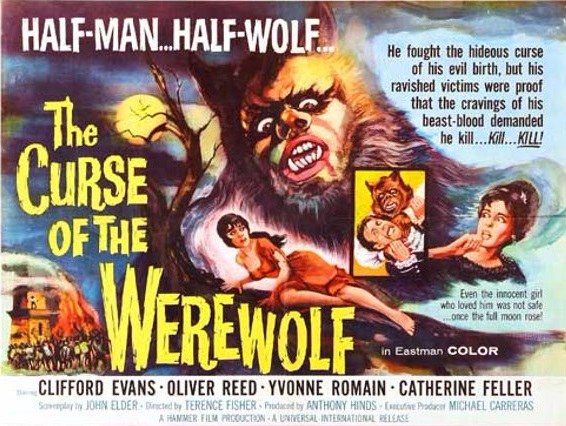
8. The Curse of the Werewolf (1961) 

A great, underappreciated werewolf picture. It may not have the groundbreaking special effects of its Universal counterpart, but it more then makes up for this with it’s sense of atmosphere and mounting terror.   


 9. Duel (1971) 

Speilberg’s first theatrical effort still holds up. Never was an rusty old truck more terrifying.  

10. Corpse Bride (2005)

A strong stop-motion effort from Tim Burton. 

11. Black Sunday (1960)

An impressive debut for Mario Bava. 

12. Constantine (2005) 

Not a great film by any means but I have a soft spot for anything that features Keanu Reeves killing demons with a cross-shaped machine gun that shoots bullets filled with holy water.   

13. Dr. Jekyll and Mr. Hyde (1931)

A film of sharp contrasts, Dr. Jekyll is carried by a strong performance from Fredric March and surprisingly animated direction from Rouben Mamoulian. 

14. The Omen (1976)

Richard Donner’s classic still holds up despite some (occasional) tonal inconsistency. 

15. The Brides of Dracula (1960) 

A rock solid sequel to the film that introduced Christopher Lee’s iconic take on the legendary nosferatu.  

16. The Blob (1988) 

A surprisingly fresh remake, the 1988 version of The Blob is much more dark and violent then the campy 60’s original.  

17. The Conjuring: The Devil Made Me Do It (2021) 

Though easily the least scary of the, now, three film series, The Devil Made Me Do It is still a strong entry and wisely keeps the focus on its characters.  

18. Halloween II (1981) 

Still the best of the many unnecessary Halloween sequels, though that’s not saying much.  

19. The Shadow of the Cat (1961) 

Erratic pacing mars what is otherwise a really unique, well directed horror film. Never was the sight of a cat so unsettling.  

20. Django the Bastard (1969)

The films unique, sepulcher atmosphere is off-sett by its plodding pacing and occasionally sloppiness.

21. The Two Faces of Dr. Jekyll (1960) 

This intriguing (and rather loose) adaptation of the Robert Louis Stevenson classic is held back (for me at least) by its (for the time) excessive raciness.  


22. Captain Clegg (aka Night Creatures) (1962) 

A fun, if fairly forgettable Hammer thriller.  

23. The Man Who Could Cheat Death (1959)

An excellent piece of science-fiction horror in the Gothic vein of Hammer’s Frankenstein films, this film would probably be higher on the list if I hadn't seen so many good films this year. 

24. Dead Snow: Red vs. Dead (2014) 

An inventive horror film to be sure, but one that's a little too tasteless for my taste.

25. The Thing (2011) 

Though a vastly inferior prequel, there are enough flashes of inspiration in The Thing to make me curious about the director’s original vision.  

26. The Stranglers of Bombay (1960)

Though not a bad film by any means The Stranglers of Bombay is occasionally dull and the plot is rather contrived in places.  

27. Color Out of Space (2019) 

Though it effectively builds a sense of impending doom and madness, the Color Out of Space is too tonally inconsistent to really be effective.  

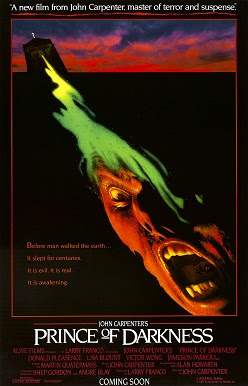
28. Prince of Darkness (1987) 

A lesser effort from Carpenter, though it does sustain a really eerie atmosphere, the plot is overly convoluted and the characters thinly drawn.  

29. Damien: Omen II (1978)

The only truly terrible film we watched this time around, the second Omen film is a dreadful bore. 


That about wraps it up for this year. Thanks for reading everyone!

Monday, November 1, 2021

Shocktober Week 4

 For this last week, my brother and I watched horror movies from Hammer Film Productions.

1. The Man Who Could Cheat Death (1959) 

A slow burn mystery film, The Man Who Could Cheat Death is an interesting exploration of mortality and obsession. It features a strong lead performance from Anton Diffring as Dr. Georges Bonnet, a scientist who has discovered how to prolong his life and preserve his health indefinitely, which leads him to begin seeing himself as being above the common lot of humanity. Arnold Marlé is great as Bonnet's aged companion, who tries, to no avail, to prevent his old friend from losing himself. Christopher Lee is featured in a supporting role as fellow scientist who begins to suspect Bonnet's dark secret.

Score: 8/10 

2. The Stranglers of Bombay (1959) 

A tale of the Thuggee in colonial India, The Stranglers of Bombay is a rather flawed horror/adventure film. The British authorities in the film are so incompetent that it takes away from the films verisimilitude. It's also an oddly paced film with the climax, in particular, being rather rushed, with Guy Rolfe's protagonist simply stumbling upon the Thuggee's secret temple and being caught, only to be set free by one of the Thugs, who has a convenient last minute change of heart. On the other hand, Rolfe makes a likable protagonist and the film's portrayal of the Thuggee is relatively accurate to the history while also doing a decent job making them a genuine threat. 

Score: 7/10

3. The Brides of Dracula (1960) 

Director Terence Fisher returns for this follow-up to his 1958 classic. The Brides of Dracula also sees the return of Peter Cushing's Doctor Van Helsing, though Christopher Lee's iconic vampire does not make an appearance, instead we are introduced to a younger vampire played by David Peel. The strongest aspect of the film is its measured pacing and true sense of terror it evokes, especially from Martita Hunt's Baroness Meinster, mother of the vampire who tries to hide him from the world, to no avail. Jack Asher's cinematography is amazing and the costume and set design are, as always, top notch. Malcolm Williamson's score is unusually emotional for a film of this kind. Yvonne Monlaur's Marianne is a bit of a weak link, behaving so naively that she becomes more of a plot device then a character. Its a solid sequel nonetheless. 

Score: 8/10

4. The Two Faces of Dr. Jekyll (1960) 

As a study in moral dissolution, the Hammer version of Robert Louis Stevenson's classic novella makes an interesting contrast to the 1931 adaptation produced by Paramount Pictures. In that film, Hyde is a violent, domineering reprobate, with little sense of self control. Here he is a cold, calculating deviant, dedicated absolutely to the attainment of pleasure. It's a good critique of the hubris of modern man, believing he can unshackle himself from moral restraint and be ruled by pure intellect. While Jekyll suffers as a result this hubris in both films, his fate differs somewhat. While Frederic March's Jekyll repents too late and is killed while under the form of Hyde, here, through a herculean struggle and at the cost of his life, he is ultimately able to exorcise the monster inside. 

Score: 8/10

5. The Curse of the Werewolf (1961) 

Terence Fisher's werewolf film is a minor masterpiece. Deliberately paced, it slowly builds a sense of uneasiness surrounding Oliver Reed's Leon Corledo. The werewolf isn't even seen until the third act but it is well worth the wait. Fisher's religious sensibilities are on full display here. It is only through the love and care of others that Leon can keep the beast at bay but one night spent in a dance-hall is enough to bring it raging back to life. Arthur Grant's moody cinematography beautifully captures the film's impressive production design and the Benjamin Frankel's bombastic score lends a film a tragic, operatic quality. 

Score: 9/10

6. The Shadow of the Cat (1961) 

An eerie, atmospheric horror film Shadow of the Cat evokes, at times, the unnerving quality of Edgar Allen Poe (whose poem "The Raven" is quoted at the beginning of the film). John Gilling's unconventional direction makes clever use handheld camerawork to create an unsettling feeling. The shots showing the point-of-view of the cat, which are intentionally distorted, are particularly effective. Barbara Shelley's Beth Venable provides the film with a relatable center, surrounded by petty, selfish characters who are slowly driven mad by their own guilt. The pacing can be a bit erratic and the denouement is just a little too neat but, other then that, this is a solid little horror film. 

Score: 8/10

7. Captain Clegg (1962)

Though not really a horror film, Captain Clegg features enough intrigue and macabre imagery to make it appropriate October viewing. It features an (as always) solid performance from Peter Cushing, as a village parson who is not quite what he appears. Anthony Hinds script, loosely based on a character created by Russell Thorndike, is a little episodic, but the characters are all fairly well fleshed-out and the film has a good cast. Director Peter Graham Scott keeps the film moving at a decent clip and the costume and set design are up the Hammer's usual standards. There are worse ways to spend 80 minutes.

Score: 7/10

Sunday, October 24, 2021

Shocktober 2021, Week 3

Supernatural horror, probably the purest form of horror, was the overriding theme this week. . . 


1. The Innocents (1961)

     A fantastic adaptation of Henry James' "The Turn of the Screw", The Innocents is able to maintain the novella's sense of ambiguity while perfectly translating its chilling atmosphere to the screen. Deborah Kerr carries the film as the harried but steadfast nanny and her young co-stars, Martin Stephens and Pamela Franklin, impress as her two youthful charges. Not to be overlooked is Megs Jenkins, who imbues the film with some badly needed warmth and humanity as Mrs. Grose. Freddie Francis' deep focus cinematography is fantastic and greatly contributes to the film's eerie, unsettling atmosphere as does Jim Clark's unusual editing. It's a great film.

Score: 10/10

2. The Omen (1976)

I decided to re-watch this (minor?) classic in memory of the lately deceased Richard Donner (RIP) though I had previously reviewed it for Shocktober in 2018. It still holds up and actually improved on a second viewing. By keeping us in the dark about Damien's true nature for much of the film, it is able to build up a real sense of mystery around him. We, like Gregory Peck's skeptical Robert Thorn, only gradually come to accept the terrible truth. Despite its occasional goofiness (the deaths can be hilariously over-the-top) Donner maintains a remarkable sense of tension throughout the film and the suspense builds and builds until the moment when Thorn drags his protesting son to the altar, fully intending to slay him. Though we, like Thorn, are fully convinced of Damien's diabolical nature by this point we can't help but sympathize when he looks at this seemingly innocent child and proclaims "God help me!"

Score: 8/10

3. Damien: Omen II (1978)

A truly lame, and completely unnecessary, sequel. The first Omen film worked because of the sense of mystery surrounding Damien. This is totally lacking here. Since we know from the start that he is the Antichrist we are left waiting around for the other characters to figure this out and it is a remarkably dull experience. William Holden and Lee Grant are largely wasted in their thankless roles as Damien's new guardians. Jonathan Scott-Taylor has at least a little more to do as a grown up Damien who, interestingly, is unaware of his own demonic nature but his transition from unassuming teenage boy to unfeeling anti-Christ is so quick as to be practically non-existent.

Score: 5/10

 4. Poltergeist (1982)

The film that defined the modern haunted house movie, Poltergeist manages to keep the story focused on the plight of its beleaguered family amid all the wacky supernatural high jinks. As in E.T. (often cited as a kind of companion piece) where Spielberg (the producer and possibly co-director for this film) seemed to almost uncannily tap in to a child's sense of wonder, this film taps into childhood fears. Indeed, the line separating the two becomes increasingly blurred in both films. It's not a perfect film. Some of the effects hold up better then others and it's portrayal of the supernatural is a bit muddled at times. For the most part, however, Poltergeist remains an effective piece of horror film-making, thanks to strong direction from Tobe Hooper (and quite possibly Spielberg as well) and an, as always, terrific score from Jerry Goldsmith.   

Score: 9/10 

 5. The Conjuring: The Devil Made Me Do It (2021)

The third entry is the Conjuring series is a distinct step down from its predecessors. This may be due in part to the absence of director James Wan, whose tight direction was so crucial to the success of the first two films. Another problem is that the stakes have been appreciably lowered here, with the threat coming not from a demon but a completely human demon-worshiper, who seeks to manipulate others not through possession but witchcraft. The film simply fails to conjure up (get it) the scares of its predecessors. This is not to say that The Devil Made Me Do It is a bad film, far from it. Patrick Wilson and Vera Farmiga continue to carry the series on their shoulders as paranormal investigators and authors Ed and Lorraine Warren and the films' unambiguous portrayal of demonic evil, and the power of the Church to combat it, is more welcome now then ever.

Score: 8/10

6. I Married a Witch (1942)

A welcome break from all the violence and terror, I Married a Witch makes for ideal light-hearted October viewing. Veronica Lake makes for a delightfully eccentric foil for Fredric March's befuddled gubernatorial candidate and (despite the fact that the two actors did not get along behind the scenes) they have wonderful chemistry together. The film's portrayal of witchcraft, though tinged with irony, is refreshingly wholesome by today's standards. Both Jennifer (Lake) and her father (Cecil Kellaway) are shown to be unambiguously wicked ("'Twill be sweet  to plague the human race again" says Jennifer) prior to the former's reform and subsequent abandonment of her witchcraft. The script Robert Pirosh and Marc Connelly has all the wit and absurdity one comes to expect from a screwball comedy of this era and director RenĂ© Clair keeps the film moving at a good clip.

Score: 9/10

 7. The Sixth Sense (1999)

Say what you will about M. Night Shyamalan, The Sixth Sense is still an absolute masterpiece. I honestly marvel at the films economy. Though deliberately paced (the first ghost does not appear until nearly the halfway mark) the film is also remarkably short and not a minute of screen-time is wasted. Shyamalan's ability to coax amazing performances, both from veteran actors and, especially, newcomers, is also incredible. There is a naturalistic quality to his best films that helps to ground them despite their heightened stories. He is greatly aided here by Tak Fujimoto's fluid, uneasy camerawork and James Newton Howard's subtle, emotional score. If you haven't watched it recently (or perhaps have never seen it) do yourself a favor and check it out. 

Score: 10/10

Next week Hammer!

Sunday, October 17, 2021

Shocktober 2021, Week 2

This week my brother and I watched sci-fi horror films. Due to a late night at work on Thursday, we missed a day this week, which is why there are only six films instead of the usual seven...

1. A Quiet Place: Part II (2021) 

A pretty solid sequel. A Quiet Place Part II is able to recreate the tense, harrowing atmosphere of the first film while expanding on its world and further developing its character (or most of them anyways). It also compounds some of that films contrivances and lacks the same kind of emotional pay-off (though I'm not sure if trying to recreate that would necessarily be a good idea). The returning cast all do a fine job as does the always reliable Cillian Murphy. Krasinki continues to impress behind the camera, building tension slowly and largely avoiding cheap jump scares.  

Score: 8/10

2. The Blob (1988)

This remake of the 1958 cult classic (which I watched and reviewed a few years back) takes the story in a darker, more paranoid direction. It also ups the ante in terms of blood and gore and the effects work is all top-notch. Though the supporting characters are generally less likable then those in the original film the two main characters are both well written. I disliked the tacked-on sequel bait ending but, other then that, this was a surprisingly good remake. 

Score: 8/10

3. The Thing (1982)

Largely ignored on its initial release, The Thing has gone on to become an essential classic and is, probably, John Carpenter's masterpiece. His talent for slowly for building tension is at an all-time high here and the isolated, paranoid atmosphere he creates is absolutely chilling. The cast of characters (lead by an overstrung Kurt Russel) all have distinctive personalities, making the thing's ability to imitate them all the more unnerving. The brilliant but revolting effects work by Rob Bottin still holds up today. Opting to ape Carpenter's signature synth sound, Ennio Morricone's score is an unusual one for the composer. It's understated but unsettling score is a perfect complement to Carpenter's paranoid, claustrophobic thriller. 

Score: 10/10

 4. Color Out of Space (2019)

This recent adaptation of my favorite Lovecraft short-story is a strange one. While it does an admirable job slowly descending into madness, the tone is inconsistent. Though it largely plays its admittedly absurd premise fairly straight, at times it descends into camp. The film also lacks focus, and can;t seem to decide who the central character is. On the one hand, Nicholas Cage (at his, well, "Cagey-est" as the father who, more then anything, fears turning into his own abusive father) has a pretty clear character arc and his actions, more then anyone else, move the story forward. Madeleine Arthur on the other hand, gets the most screen-time as the Wiccan practicing daughter Lavinia while Elliot Knight's Hydrologist  Ward Phillips serves as a sort of inconsistent POV character. drifting in and out of the story too frequently for the conceit to really work. It's an intriguing effort but one that ultimately convinced me that this story (like much of the writer's work) is unadaptable.

 Score: 6/10

5. E.T. The Extra-Terrestrial (1982)

Not a horror film but a fun one to watch with the family around this time of year. I have to admit that I've always been a bit befuddled by the sterling reputation of this Spielberg classic. This viewing was a better experience, overall, then my first. I really appreciate how much of the story is told visually rather then trough dialogue (John William's score is absolutely essential in this regard). The film also does a good portraying how scary but also how wonderful, childhood can be. There is an element of mystery, even of sublimity to the titular alien that evokes the awe and wonder with which a child looks at the world. My main problem is still Elliot himself. I just find the character too whiny to really latch on too (his brother and sister are far more likable). In any case the film has grown on me, but I've yet to fully understand it's lofty reputation. 

Score: 8/10

6. The Thing (2011)

This premake was better then I expected it to be. It does a fairly decent job staying consistent with the events suggested by the original film while also adding enough original material to keep things interesting. With that said, it is far inferior to the 1982 film. Director Matthijs van Heijningen Jr. clearly has a love and reverence for Carpenter's film, but he lacks that director's penchant for building suspense. An early scene which takes place in the States is ill-advised and unnecessary, taking away from the film's sense of isolation and claustrophobia. The sense, in the original film, that anyone at anytime could be the Thing, is only rarely realized here. The character's are also less well drawn with only Mary Elizabeth Winstead's lead and Ulrich Thomsen's Dr. Sander making much of an impression. Reportedly the film underwent extensive re-shoots and editing at the behest of the studio, who also insisted on replacing the film's practical effects with CGI. It would be interesting to see the director's original cut but, until then this remains a frustrating film, though one that's probably better then it had any right to be. 

Score: 7/10 

Next week we're watching supernatural horror. Stay tuned!

Monday, October 11, 2021

Shocktober 2021, Week 1

It's that time of year again...

          Though we usually do a different theme each week, my brother and I decided to watch random films the first week, both to catch up with some old favorites, and watch a few horror films that we had been wanting to get to but that didn't really fit with the themes we were going for later in the month. 

1. Prince of Darkness (1987)

Certainly, the cosmology that it posits (Satan is the off-spring of an all-powerful, anti-God who the Church is trying to prevent from entering into our world from the realm of anti-Matter), though preposterous, is deeply disturbing. On the other hand, the mixture of science fiction and the supernatural never quite gels together and the script is, at times, pedantic, explaining too much about the phenomenon and leaving too little to the imagination. Outside of Donald Pleasence's shaken priest and Victor Wong's unorthodox professor, the characters never really come alive. Overall this is a lesser effort from Carpenter but is has lot of creativity and is genuinely unsettling at times. 

Score: 7/10

2. The Fog (1980)

The first really "pure" horror film I ever watched was John Carpenter's The Fog (before this I had seen films like Jaws and Predator, whose entry in the genre some might dispute). I've always had a soft spot for it despite some of it's flaws. It's fairly obvious, for instance that the film was extensively re-shot to make it more graphic. Despite this, it manages to maintain a relatively consistent tone and is wonderfully atmospheric. Dean Cundy provides maybe the strongest cinematography of any of his collaborations with Carpenter. It also features one of the director's best musical scores. A cast which includes Carpenter regulars like Adrienne Barbeau, Tom Atkins, Nancy Loomis and Charles Cyphers is buffered by veteran actors Hal Holbrook and Janet Leigh.

Score: 9/10

3. Dr. Jekyll and Mr. Hyde (1931)

Perhaps fittingly, Dr. Jekyll and Mr. Hyde is a film of strange dichotomies. On the one hand, it takes the novella's themes about the duality of man in a much more explicitly Christian direction. Jekyll's attempt to separate his bestial nature from his higher self are seen as an abomination, an attempt to blasphemously science to circumvent man's fallen state. At one point, Jekyll cries out, "This is my penance. Do you hear, oh, God?" On the other hand, it is a rather provocative film (at least for the time it was made) in it's portrayal of sexual degeneracy (when it was re-released in 1936, the Code required 8 minutes to be removed before the film could be distributed to theaters). Technically the film is a marvel. It's use of long, tracking shots is especially striking for this period and the make-up used for the transformation scenes is frankly astounding. 

Score: 8/10

4. Dead Snow 2: Red vs. Dead (2014)

Like the first film, Dead Snow 2 delights in its gratuitous violence. The first film owed a great deal to Sam Raimi's The Evil Dead (both feature a group of young people who find themselves under attack from the undead in an isolated cabin) so its not surprising that this one is often indebted to its sequels Evil Dead II (particularly the scenes where Ash's arm begins attacking him) and Army of Darkness (which also features the protagonist summoning an undead army). Like those films it has a more comedic, tongue-in-the-cheek tone then its predecessors. It also (clearly) has a bigger budget. Because of this, some of the low-budget charm of the original is lost but it remains entertaining for those who like this sort of film. With that said I found the intrusion of the stereotypical nerd characters irritating and the ending, which is supposed to be heartwarming, came across as rather perverse. 

Score: 7/10

5. Constantine (2005)

This is basically the Matrix meets the Exorcist. Director Francis Lawrence directs with real panache and Keanu is right in his element as the jaded (but ultimately good-hearted) Constantine. I'm a sucker for this over-the-top demon hunting sort of film (cross-shaped firearms for the win!). Constantine presents a rather muddled cosmology, one tainted with strains of manichaeism: Angels and demons are locked in an eternal struggle for mankind's souls originating in a standing wager between God and Lucifer. Constantine's redemption is highly problematic from a theological perspective, As is a scene where Lucifer "releases" a soul from Hell though I must admit that I'm rather keen on Peter Stormare's portrayal of the fallen angel. His perverse, serpentine presence is contrasted with a petty kind of spite that seems somehow fitting. More troubling is the film's portrayal of the arch-angel Gabriel as a demented, overzealous servant, bent on forcing humanity to become worthy of God's grace by aiding Mammon, the son of Lucifer, in setting up his own kingdom.

Score: 6/10

6. Duel (1971)

Spielberg's first feature-length film remains a gripping thriller. The stripped down plot (man angers a truck driver when passing him on the highway and ends up being hunted down by him) has a surprising amount of mileage (no pun intended). Is it a horror film? I think so. Significantly, the driver of the truck is never really seen, making the vehicle almost a force of nature. This element of an unknown, seemingly unstoppable menace, is at the heart of horror. Dennis Weaver carries the film as the mild mannered business man who must find his inner manhood in order to survive this harrowing ordeal (if the film has a message it is certainly "don't be a simp"). It's a great little film.

Score: 9/10

7. Black Sunday (1960)

The directorial debut of Mario Bava, a Italian director who would go on to direct such classic horror films as Black Sabbath (1963) and Blood and Black Lace (1964). A classic piece of gothic horror, the plot of the film involves a witch (Barbara Steele) returning from the grave after 200 years to exact revenge on the ancestors of the men who put her to death. Black Sunday is a wonderfully atmospheric film, invoking, at times the classic Universal monster cycle. It is also a rather violent and provocative film for its time (in one scene the witch's robe is lifted up, revealing the rotting, undead flesh inside). In this it reflects the contemporaneous films from the British Hammer Film Productions. It also shares those films use of religious iconography as an weapon against evil. 

Score: 8/10