Monday, February 20, 2017

Musical Mondays: Les Miserables (2012)

This is the first of a new series of reviews I'm (hoping) to do. I love musicals and, as I feel they are sadly overlooked these days, I've decided to review a musical film once a month on Monday. This week I'm tackling the 2012 adaptation of one of my favorite novels...


     Les Miserables is a musical film released in 2012. It is adapted from the stage musical by Claude Micheal Schonberg, which was based on a novel of the same name by Victor Hugo. It is directed by Tom Hooper and stars Hugh Jackman, Russell Crowe, Amanda Seyfried, and Eddie Redmayne. It tells the story of Jean Valjean (Jackman), an ex-convict in In 19th-century France, who for decades has been hunted by the ruthless policeman Javert (Crowe) after he broke his parole. He agrees to care for a factory worker's (Anne Hathaway) daughter, named Cosette (Seyfried) when he finds her dying in the street. Valjean must continue to escape Javert's pursuit and take care of his newly adapted daughter amidst the turmoil of the 1832 June Rebellion.

     It's no secret to anyone who regularly reads my blog (if there is indeed anyone who does) that I unabashedly love Victors Hugo's Les Miserables. This gives me a somewhat unique perspective on this film. At just under 1500 pages, Hugo's novel is rather difficult to adapt. One would have to either focus only on certain characters/incidents (admittedly a wiser approach) or try to condense as much of the book as possible into a 2-3 hour film. Hooper, following Schonberg's model, opts for the latter choice. The book is both a personal story, of Jean Valjean’s journey to redemption, and a wider historical retelling of the 1832 Paris Uprising. This film, like the play it's based on, succeeds well enough with the former and not at all with the latter.

     Jean's journey, akin to a sort of martyrdom, is depicted as a series of struggles. First, he must decide how to use the opportunity given him by the bishop who lies to protect him from being arrested again. He chooses to amend his life and live to help others as the Bishop helped him. Then, years later Valjean, who has now taken up a false name and become the mayor of a small town, must choose between letting an innocent man, who is mistaken for himself, go to prison or giving himself up. As he won't betray his conscious he chooses to reveal himself. Finally, he must decide what to do concerning Marius, the young revolutionary who his daughter has fallen in love with but who threatens to disrupt his anonymous existence with Cosette. While these struggles are somewhat truncated, they work well enough to carry the film.

     Where the film really stumbles is in its depiction of the Paris Uprising of 1932. The script contains very little real background for the events that lead up to this uprising and we, as an audience, are given no real idea what the motive behind the rebellion is. Certainly living and working conditions in Paris are depicted as being pretty terrible but how this is connected to the current French government or how an armed rebellion will help is anyone's guess (unless your familiar with the real history). We don't even really know what Marius and his friends hope to accomplish beyond incredibly vague ideas like "a new day" or "freedom". This might work for rebellious teens looking for a vicarious outlet for there frustrations but it's not really good storytelling.

     The musical relies on big emotional outbursts from the players in order to really hold the audience's interest. In order to translate this to film Hooper uses long takes and records much of the singing live. This has advantages and disadvantages. On one hand it allows for a feeling of immediacy and intimacy with the performer, similar to what one might feel during a play. On the other hand it limits what the director can do with framing and blocking and can become obtrusive if overused. Similarly, these crescendos themselves only work in certain, more emotionally charged scenes. By featuring them practically back-to-back more than once Schonberg, and Hooper by extension, risk exhausting the emotional weight of the piece as a whole and I'd be lying if I said that the director doesn't occasionally overstep his bounds in this regard.

     Because of its reliance on this kind of emotionally intense storytelling, Les Miserable lives and dies on the strength its performances. Fortunately, they're pretty solid here, for the most part. Hugh Jackman is especially effective as Valjean, bringing a perfect blend of vulnerability and gravitas to the role. Anne Hathaway is every bit the world weary, desperate Fantine. Eddie Redmayne and Amanda Seyfried do as well as they can with, admittedly, thin characterization. Samantha Banks shines as the forsaken Eponine and Sacha Baron Cohen's take on Thenardier is particularly slimy. There are a few weak spots. Russell Crowe's singing is rather rough around the edges. According to him this was a conscious choice, but I'm not convinced that it worked. Helena Bonham Carter, though she seems like a natural fit to play the cantankerous Madame Thenardier, decides to go for an overly sexualized/damaged performance and singing style that, frankly, is just off-putting.

     In the end Les Miserables is a bit of a mess. Its attempt to truncate a long, expansive novel into a 150 minute film won't work for everyone but it works, well enough, for me.

Score: 7/10

Wednesday, February 15, 2017

Western Wednesdays: The Last of the Mohicans (1992)

SPOILER WARNING 
     The Last of the Mohicans was released in 1992. It is directed by Micheal Mann and stars Daniel Day-Lewis and Madeleine Stowe. During the French and Indian War, three Mohican frontiersmen, Hawkeye (Day-Lewis), Uncas (Eric Schweig), and their father Chingachgook (Russel Means), on their way to Kentucky come upon a small British party and save them from a Huron ambush. They must escort the survivors, including Major Duncan Heyward (Steven Waddington), and Cora and Alice Munro (Madelien Stowe and Jodhi May), the daughters of the commander of Ft. William Henry, to the fort.

     At first glance The Last of the Mohicans may not seem like a western as it takes place not in the western U.S.A. but upstate New York. Then of course, at the time this film takes place upstate New York was the frontier. This film contains some common western themes or tropes. Chiefly, the corruption of civilization represented by the British and French soldiers vs. the purity of the wilderness, represented by the settlers and the Indians. This comes up again and again throughout the film. Despite obtaining an agreement from General Webb guaranteeing that they can protect their families if endangered, Colonel Munro refuses to release them. Cora chooses Hawkeye over the respectable Hayward, though he still shows that he cares for her. Finally, Magua is corrupted by his contact with the white man. As Hawkeye tells the Huron Chief Senaca when trying to convince him to release Alice and Cora, "Would Huron fool Seneca into taking all the furs of all the animals of the forest for beads and strong whiskey? Those are the ways of the Yengeese and the franais traders and their masters in Europe infected with the sickness of greed. Magua's heart is twisted. He would make himself into what twisted him."


     Outside of a few monologues like this, the script for this film, written by Micheal Mann and Christopher Crowe and adapted from the novel by James Fenimore Cooper, is hardly verbose. This is rather appropriate actually as this story is breathlessly paced and the characters are defined chiefly, by their actions rather than their words. As a result of this much of the character depth comes from the performances which are all really solid especially Day-Lewis and Wes Studi as Magua. Of course, the camera work and editing are incredibly important as well. Fortunately, Micheal Mann is more than up to the task. He excels at visual storytelling and his frequent collaborator Dante Spinotti, contributes some really gorgeous cinematography to the film. The score, by Trevor Jones and Randy Edelman, is infused with a Gaelic sensibility. It drives the movie forward and gives it a distinct ethnic flavor. Editor's Dov Hoenig and Arthur Schmidt effortlessly blend the score with Spinotti's visuals to create some really unforgettable sequences. Despite the movie being cut down by nearly an hour, it still succeeds incredibly well.


     The film is not without certain flaws. Because so much material had to be cut, the relationship between Uncas and Alice is not very well established. This is particularly problematic at the end of the film. I shouldn't really buy that Alice throws herself off of the cliff in the climax. In addition to the fact that her despair over Uncas' death isn't well set up the whole situation is somewhat contrived. If Uncas would simply have waited for Hawkeye and Chingachook to catch up he may have fared much better than he did on his own. There's really nothing in the story that makes this situation urgent. Yet somehow the scene always feels urgent. It works for me emotionally even if, intellectually, I know it shouldn't. If that doesn't speak for Mann's talent as a filmmaker I don't know what does.

    The Last of the Mohicans is one of the best westerns of the 1990's. It features solid performances, an unforgettable score, and is the work of a talented director at the top of his game. It may have its flaws but, in many ways, those flaws just leave me wishing for more. Here's hoping Mann's original 3 hour work-print is released someday.

Score: 9/10

Wednesday, February 1, 2017

Western Wednesdays: 3 Godfathers (1948)

I saw this movie when I was a kid and remembered it being pretty solid. As it has a Christmas theme I thought it would be a good western to watch over the holidays which, I realize, are now over for most people.

     Three Godfathers is directed by John Ford and stars John Wayne, Pedro Armendariz and Harry Carey, Jr. In it, cattle rustlers Robert Hightower (Wayne), Pedro "Pete" Rocafuerte (Armendáriz), and William Kearney (Carey) rob a bank in the town of Welcome, Arizona, and flee into the desert, pursued by a posse led by Sheriff Buck Sweet (Ward Bond). Searching for water they come to a water hole, only to find that it was inadvertently destroyed by a tenderfoot, who then left his pregnant wife to chase after his livestock. They assist the wife (Mildred Natwick) in the birth of her son. When she dies and names the men the baby's godfathers they must now keep the baby alive while avoiding the sheriff's pursuit and reach a town where they can get water.
     One of the first things I noticed re-watching this movie was the beautiful cinematography courtesy of Winton Hoch who also worked with Ford on She Wore a Yellow Ribbon, The Quiet Man, and The Searchers among others. Like those films (and most John Ford movies really) 3 Godfather is incredibly picturesque. You could pause the film at almost any point and get a beautiful still photograph. Similarly, Ford made this film during the peak of his career and his command of visual storytelling was rarely better then it was here.

     Unfortunately, the story that Ford and Hoch are telling is a rather inconsistent one. For the first two thirds of the film everything, for the most part, is pretty solid. After the robbery in Welcome the film turns into a fairly tense chase movie, with bits of humor dispersed throughout. Its after the three men run into the mother and her baby the film takes a strange turn. Finding a bible in the wagon after the mother dies, William becomes convinced that their finding the baby was the will of God and that they should head for the town of New Jerusalem, like the three magi in the Gospel story. The problem I have is that this religious element comes, seemingly, out of nowhere and the rest of the film is bogged down with heavy handed talk of faith and destiny. What makes it worse is that the film becomes tonally inconsistent at this point. On the one hand there is the sense that God is indeed guiding these men to save the baby, but then one of them dies a terrible death of dehydration and heat exhaustion and another one commits suicide after falling and breaking his leg. Surely it would have been wiser simply to surrender to Sheriff Sweet at this point. Finally, the film's resolution feels overly drawn out, as Hightower seeks to retain custody of his godson after he serves his year in prison. After all the violence and hardship these scenes simply lack dramatic weight.

     Despite all this I still feel compelled to recommend 3 Godfathers. It's still one of John Ford's most visually arresting films and the story works well enough until the last act.

Score: 7/10

Monday, January 30, 2017

My Favorite Films: Star Trek II: The Wrath of Khan

"I see a beautiful city and a brilliant people rising from this abyss. I see the lives for which I lay down my life, peaceful, useful, prosperous and happy. I see that I hold a sanctuary in their hearts, and in the hearts of their descendants, generations hence. It is a far, far better thing that I do, than I have ever done; it is a far, far better rest that I go to than I have ever known. "
-Charles Dickens, A Tale of Two Cities


     My first exposure to Star Trek was to listening to the opening themes to the various movies on YouTube. After hearing in the comments section for one song how Star Trek II greatly improved upon it's predecessor I immediately became intrigued. After watching the original trailer for the film I was even more interested in watching it. The voice over in the trailer speaks of "a genetically superior tyrant" "banished by a star-ship commander he is destined to destroy." In retrospect it's a pretty poor description of the movie. But my teenage self was attracted to the idea of films that had a larger mythology or backstory and here was a film with a whole TV series worth of continuity behind it. This was a time when I was just getting into other franchises like Star Wars, The Lord of the Rings and Indiana Jones. Wrath of Khan wasn't the first Trek movie I saw, that was Star Trek VI, but it was the film that really sparked my interest in the series.
   
     What's great about Wrath of Khan is how tight it is thematically. This is a story about old age, death and friendship. Kirk starts out as an admiral. Outwardly he seems to be in a good place having moved up the chain of command and being able to enjoy the benefits of his storied career in relative comfort. But, as Kirk quotes from the opening lines of A Tale of Two Cities, Spock's birthday present for Kirk, "It was the best of times, it was the worst of times." As an admiral Kirk is forced to sit on the sidelines and watch others perform the job he used to love. He feels like a relic, as he tell's McCoy "Galavanting around the cosmos is a game for the young". He wants to captain a starship again but doubts that he still has what it takes. At the same time he's dubious of the legacy he's left behind. After serving starfleet for so many years, what has he got to show for it? Carol Marcus and her son David who, unbeknownst to either of them is also Kirk's son, are an extension of this regret, representing the life he might have had if he'd not have sacrificed so much for his career. In some ways he mirrors Ebenezer Scrooge from that other Dicken's classic, A Christmas Carol, watching the woman he once loved celebrating Christmas with her family, the family he could never have. Khan, on the other hand, is a mirror for Kirk. He is quite literally a relic, a man from centuries ago who's main purpose, conquest and domination, has been left behind by humanity. He also represents Kirk's legacy, a figure from his past coming back to haunt him. A reminder that his illustrious career was not all it was cracked up to be.

     Another theme in the film is death, something that Kirk, as he tells David near the end of the film, has never really faced before. This is beautifully foreshadowed by the Kobayashi Maru, a no-win scenario designed to force aspiring starfleet officers, in this case Lt. Saavik, to face the possibility of death. We later find out that, during his time in star fleet academy, Kirk cheated in order to beat this test. This demonstrates the way Kirk approaches life, he doesn't believe in a no-win scenario. As he tells David, later in the film, "I haven't faced death. I've cheated death." In this film he's forced to come to terms with this, as he's repeatedly confronted by the consequences of his actions. First, when he witnesses Scotty's nephew dying after Khan's surprise attack catches him off-guard and then, at the end of the film, when Spock dies. The Genesis Device, something that could have been a cheap macguffin, serves to further reinforce this theme of facing death. McCoy only sees Genesis for it's destructive capacity at first. Similarly Khan is only interested in using Genesis as a tool for conquest. Spock on the other hand, sees it's creative possibilities. At the end of the movie he dies as a result of Khan activating the device. His death makes Kirk realize that sometimes, no matter what you do, you or people you care about will be hurt or killed. Ultimately you can't run from death.

     Finally, Kirk's friendship with Spock informs his arc in this film. For Trek fans we already know how close these two characters are but for newcomers the film helps to reinforce their friendship in a few key scenes. Firstly, when Spock gives Kirk his birthday present, a copy of Dicken's A Tale of Two Cities. Then, when Kirk goes to Spock's quarters to tell him that they have to investigate Regula One they have this wonderful conversation where Spock urges Kirk to become a captain again, his own sense of pride as the current captain notwithstanding. He says,"You are my superior officer, you are also my friend. I have been and always shall be yours." Finally, when Kirk and the others are beamed off the Genesis planet we get a sense of there working relationship as they explain how they tricked Khan. Saavik accuses Spock of lying to which he responds "I exaggerated". When we finally get to the climatic death scene we really understand what it means for these two characters. After Spock's death Kirk begins to bond with David who realizes that Kirk is his father and tells him that he's proud of him. Kirk realizes that death and old age are not the end and determines to honor Spock's sacrifice. As Kirk says, quoting Spock "There are always possibilities" (something that Spock never said, exactly, but in line with similar sentiments he expressed). As Spock's coffin (a repurposed torpedo) descends toward the newly formed Genesis planet Kirk is able to say "I feel young." He and McCoy have both come to appreciate the creative possibilities of Genesis more fully.

     Star Trek II is a very performance driven movie. It's carried, chiefly, by William Shatner and Ricardo Montalban. Kirk and Khan never share any screen-time together, yet their rivalry is palpable. I love William Shatner and this film contains, perhaps, his best performance. He brilliantly channels over-the-top acting that people remember him for in the original series in a way that totally makes sense for this film. People remember this movie for the scene in which Kirk yells KHAAN! after Khan maroons him on Regula One, but what they forget is that he says that line for Khan's benefit. Kirk is channeling his own anger toward Khan and his frustration with himself in order to fool Khan into believing that he's really won. It's Kirk who's acting over-the-top not Shatner. Montalban is also really great as Khan. He steals every scene he's in as the brilliant former dictator with a touch of madness. He's driven enough to make you fear him and flawed enough to make you sympathize with him, at least to some degree. The rest of the cast also do well in their supporting roles, especially Nimoy. His method acting, as always, provides a really good contrast to Shatner's classically trained character acting. The quiet dignity he conveys during his death scene adds much to its emotional power as does Shatners teary eyed reaction. It's some of the best acting either of them ever did. I would be remiss not to mention DeForest Kelly, who is irascible as ever as the all-too-human Doctor McCoy. He adds a welcome element of humor in what is otherwise a very heavy, dramatic film.

     Nicholas Meyer direction also helps to carry the film. Despite being on a tight budget and a fairly cramped schedule, Meyer delivers a really smart and entertaining movie. As someone unfamiliar with Star Trek, Meyer was able to approach the material with fresh eyes and he really reinvigorated the franchise with this film. He enjoyed Horatio Hornblower novels growing up and so decided to imbue this movie with a nautical feel. The Enterprise is operated much like a sea-going vessel and the climatic battle in the Mutara Nebula is more in line with a submarine film then, say, something from Star Wars. The special effects, by Industrial Light and Magic, are truly spectacular. This film had a lower budget than its predecessor, The Motion Picture, but it never really shows.That's mainly because this film uses a less-is-more approach to the special effects, using them to tell the story rather than trying to evoke of a sense of awe for its own sake. James Horner's score for this film is one of the best of his career. Evoking the nautical feel that Meyer was aiming for, the score is both haunting and awe-inspiring. Horner's themes for the Enterprise and for Khan really help to drive the film's climax. This score, along with the visual effects and Nicholas Meyer's direction, add a lot of atmosphere to the film.

     Ironically the thing I most love about Wrath of Khan today is not how it reaches back into Trek canon, but how forward looking it is. It builds on and respects what came before by using a villain from the original show and bringing back the character driven storytelling that The Motion Picture lacked. But it also takes the series in a bold new direction featuring a darker, more mature story and making Starfleet more militaristic. Yet it still retains the charm and sense of hope that made the original series so enduring. Many of the executives at Paramount expected this to be the last Star Trek film but its thanks to its success that Star Trek was able to live on and tell more stories. As Spock would say "there are always possibilities." Indeed Trek has always championed the great possibilities offered by technology and human innovation and this film is no different. It recognizes the dangers of a device like Genesis but stresses that it's the human ability to overcome challenges and use this technology for good that makes it a worthwhile enterprise. The human adventure, like Star Trek itself, is just beginning.

Thursday, January 19, 2017

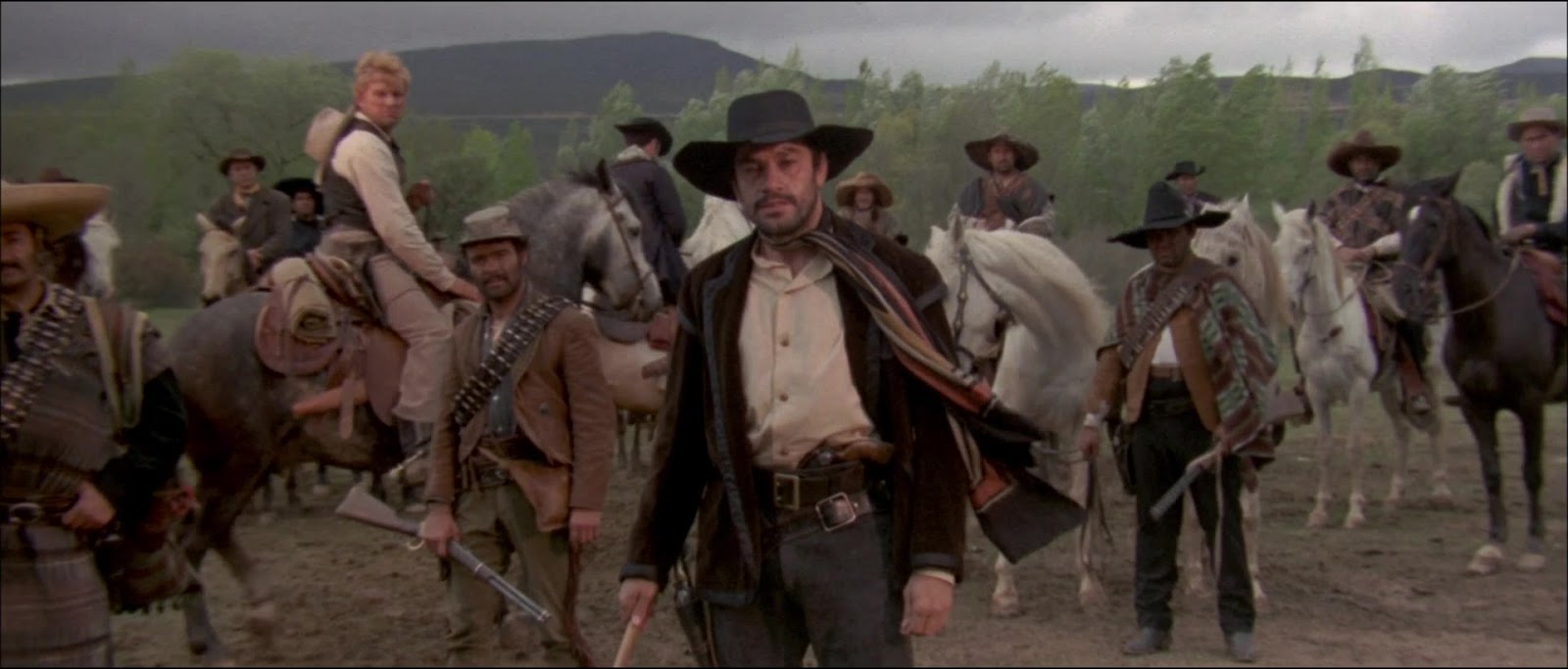
Western Wednesdays: Navajo Joe (1966)

I know its Thursday but better late then never...

     Navajo Joe was released on November 25th 1966. It is directed by Sergio Corbucci (Django, The Great Silence) and stars Burt Reynolds and Aldo Sambrell. It tells the story of an outlaw gang lead by Mervyn Duncan (Sambrell) who are stalked by a mysterious Indian figure (Reynolds) after massacring an Indian village. When Duncan plots with his former partner Lynne (Pierre Cressoy), now a doctor in a nearby town, to steal a shipment of gold intended for the townspeople, it's up to the Indian to stop them and get vengeance for his people.

     Navajo Joe has a few things going for it. Burt Reynolds, with his background in Football, brings a lot of athleticism and physicality to the titular hero. Similarly the director Sergio Corbucci really knows how to stage exciting action scenes and all of the action scenes in the film, particularly the final shootout with hearkens back to Anthony Mann's Winchester 73, are a lot of fun. Ennio Morricone, as always, writes a really memorable score, though the film's low budget (I assume) forces the film makers to repeated certain cues quite often.

     On the other hand the characters in this film are quite thin, even by Spaghetti Western standards. Joe wants revenge, the townspeople want their money and Duncan and Lynne want the money for themselves. That's about as deep as it goes. As with Corbucci's later work there are attempts at adding social commentary here with Joe pointing out that he's more of an American than the townspeople, who are reluctant to hire him, as his ancestors have been here many years more than their's. However, it's rather brief and somewhat forced. Indeed, the dialogue in general has a forced/cumbersome feel to it and there's a lot of lazy exposition. The film is also awkwardly paced at times. The main plot takes too long to set up but the pacing does get better as the movie goes on.

     In the end Navajo Joe is a fairly entertaining Spaghetti Western plagued with bad writing and pacing issues. It's not a film I would recommend for those not familiar with the genre but it's certainly worth checking out for Spaghetti Western aficionado's (though most of them have already seen this film anyway).

Score: 6.5/10

Sunday, January 15, 2017

La La Land Review

Like the western the Hollywood musical is a dying genre but it's also a genre I really love. When I saw the trailer for La La Land I got really excited. Here was a decidedly old school looking musical coming from a young new director recently nominated for an Oscar. The movie didn't disappoint...
     La La Land is directed by Damien Chazzelle and stars Emma Stone and Ryan Gosling. It tells the story of Mia (Stone), an aspiring actress, and Sebastian (Gosling), a jazz musician who dreams of opening his own club, the two meet and bond over their mutual refusal to give up there dreams. But their love for each other is tested as their pursual of these dreams starts to pull them apart.

     Though I didn't have the best theater going experience with La La Land (I had to sit in the front row and the acoustics really weren't the best) it still grabbed me from the opening number. We see a bunch of cars stuck in busy LA morning traffic. All of a sudden a young girl gets out of her car and begins singing the opening number. Immediately I can tell the kind of movie I'm about to watch. Chazzelle intended the film as a homage to creative people who chase their dreams. He drew inspiration from classic Hollywood musicals and from the films of Jacques Demy, most known for his musical The Umbrellas of Cherbourg (which I was previously unfamiliar with but now kinda want to check out).

     My favorite scene happens fairly early in the film. In it Sebastian takes Mia to a Jazz club and explains to her why its an amazing and underappreciated musical genre. Jazz plays a big a role in this film and, in many ways it provides a contrast (thematically) with the more optimistic elements of the story. Life, like jazz, is, after all, complex and not every story has a happy fairy tale ending.

     The musical numbers are all quite good. The lyrics by Pasek and Paul are clever and help to reinforce character while Justin Hurwitz's Jazz infused instrumental evoke classic Hollywood while also venturing into more melancholy territory at times. They're fairly well integrated into the narrative, although one scene did take me out of the movie for minute, and they serve the story and characters. Gosling and Stone can both sing and dance surprisingly well and put a lot of passion into their performances. Both actors drew from their experiences early in their acting careers. Chazzelle's direction is superb effortlessly blending scenes of lighthearted fancy with ones of real dramatic pathos.

     La La Land is a a fitting tribute to those who dream, a classy throwback to old musicals, and love letter to jazz and the city of Los Angeles. It's easily one of my favorite films of 2016.

Score: 9/10

Monday, January 9, 2017

The Reviews That Got Away 2016

     I've written more reviews on this blog in 2016 then in any year past. Despite this there were some films released this year that I watched but never got around to writing a review for. As the year has now come to a close I've decided to briefly summarize my feelings on these films.

     First off we have the only horror film I watched in what has been purportedly a pretty good year for the genre. I really liked The Conjuring 2 and found it scarier than the original (though that might be because I didn't see the original in the theater). I really appreciate how it built on the characters from the first film and continued to explore there relationship without ever feeling derivative. With that said the plot was a little confusing at times and it was not as well paced as its predecessor.
Score: 8.5/10
     Next we have a direct-to-Netflix sequel that had me equally excited and trepidatious. I'm a huge fan of the original and always wanted to see a worthy follow up. However, the absence of a theatrical release and the fact that director Ang Lee wasn't returning worried me. In the end Sword of Destiny is definitely not the great sequel I was hoping for. It doesn't really expand on any of the characters or themes established in the original. On the other hand it works fairly well as a stand alone Wuxia film with some pretty entertaining action set pieces. If that's all your looking for Crouching Tiger Hidden Dragon: Sword of Destiny should be just fine but if you want something on the same level as the original your going to be disappointed.
Score: 7.5/10
     When I heard that Pixar was doing a sequel to Finding Nemo my first reaction was why? The first film feels so perfectly self contained. Ultimately Finding Dory did little to dispel my doubts. It has its moments. I laughed at a lot of the jokes and the emotional moments work pretty well (though not as well as the first movie). The animation, as in the first film, is really great although we spend far less time in breathtaking underwater locales. The really problem is that this film treads a lot of ground we've already covered in the first film. Marlin comes to the realization, once again, that he needs to be more assertive and less protective, this time around he's reminded of this by Nemo, in Dory's absence. There are also some moments that stretch credulity a little far. It's not a bad film, its just not very original or even remarkable.
Score: 7.5/10
     I briefly touched on Suicide Squad in my article Suicide Squad and Why Critics Matter, as I said there I really don't have much to say about this film. To elaborate on what I already said the writers don't have the best grasp on these characters, in particular Harley Quin and the Joker. In the comics they have an abusive relationship. Harley loves the Joker (or at least is infatuated with him) but he doesn't really care about her. In this film they come across like depraved star crossed lovers and, for lack of a better word, it just feels wrong. More importantly however, the film just has no real narrative flow. Scenes just kind of happen one after another with little to no connective tissue. With that said, I don't hate everything about the film, the performances are good for the most part, though I don't particularly care for Jared Leto's bizarre take on the Joker and Margot Robbie seems to alternate between an exaggerated New York accent (as the character had in Batman the animated series) and her own natural voice, seemingly without any rhyme or reason.
Score: 5.5/10
     The second direct-to-Netflix film I watched this year The Siege of Jadotville is actually quite good. It feels like more of an old-school war film like Zulu or The Desert Rats in that it's not interested in presenting any explicit anti-war message or commenting too much on the politics behind the event. Rather it focuses on the struggle of the soldiers involved in the battle. It's fairly historically accurate (certainly more so than most historical films that Hollywood puts outs) and does a good job evoking the 1960's. The performances are all solid and the action is comprehensible and exciting. Some might find it a little dull but, as a history buff, I really dig it.
Score: 9/10
     I was initially excited about Fantastic Beasts and Where to Find Them. It looked like a charming little foray into the Harry Potter universe. When I found out that it was meant as the first of a new five film series I became really worried (that seems to be a continuing trend in this article). Was this going to be like the Hobbit movies all over again? Pretty much. As with the first Hobbit film Fantastic Beasts feels like a nice little story that's be co-opted by a larger one that's meant to serve as backstory to the original films looming in the background. In addition, while the Harry Potter books and films built on each other and gradually upped the stakes and became bigger and darker as they went along, this new series features a monster wreaking city wide destruction right off the bat, only to undermine any sense of danger with a Superman-esque deus ex machina at the end. It makes me wonder what these films are going to do moving forward. With that said the characters are likable and fairly well written, it has some beautiful visuals, and James Newton Howard's score is pretty good.
Score: 7.5/10
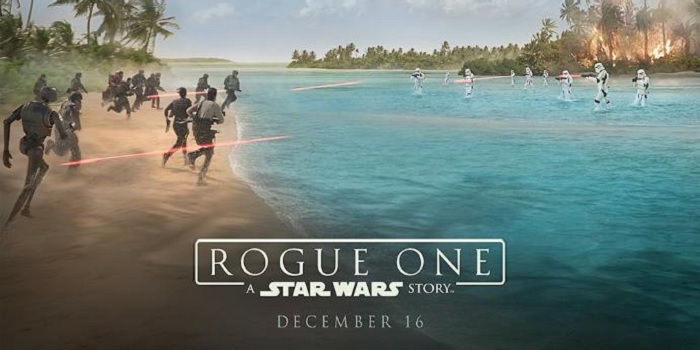
     With Rogue One: A Star Wars Story, once again, I was initially excited but became more concerned the closer we got to the film's release. This time it was the rumored reshoots that mainly worried me along with some bad dialogue in the trailers. Overall the movie was ok. The last act was pretty entertaining and the plot, at least, makes sense and is coherent. Unfortunately the main characters are pretty dull and the nods to A New Hope get a little distracting. I don't think it's bad necessarily but it's easily the most forgettable Star Wars film, other than The Clone Wars, to be released in theaters.
Score: 7/10

Note: I missed Western Wednesday last week as I've been too busy with Christmas to watch any westerns, hopefully it will return next week.