Sunday, November 19, 2023
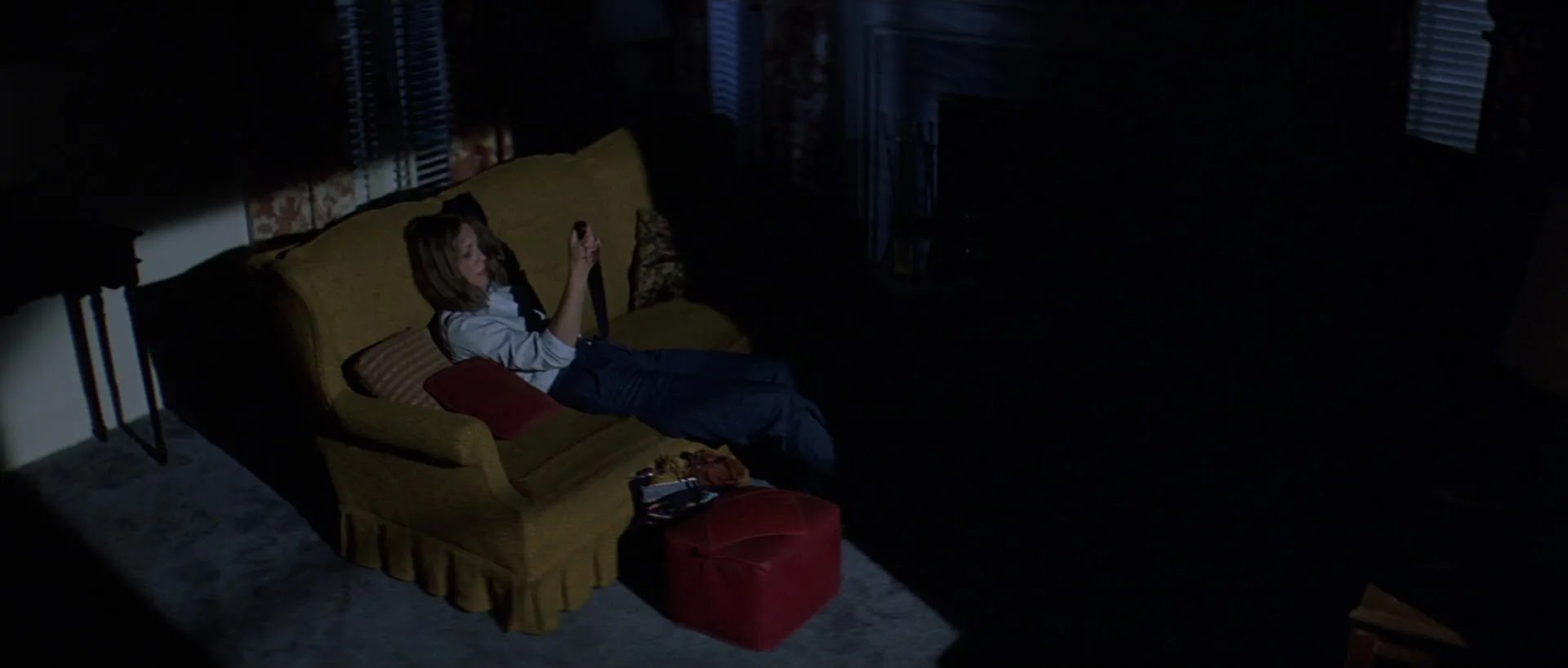
My Favorite Films: Halloween (1978)
Wednesday, November 1, 2023
Shocktober 2023, Week 2
8. Psycho (1960)
Hitchcock's influential classic is still impactful all these years later. Anthony Perkins's subtle, unnerving portrayal of Norman Bates is bolstered by solid performances from the veteran supporting cast and by Bernard Herman's iconic, unsettling score. Hitchcock draws from his nearly 40 years of directing experience to craft a film that plays with many conventions that he himself had helped to establish. The film's final, exposition-filled scene is its only sore spot, largely because the director had done such an expert job subtlely communicating the character's motives to the audience throughout the film that it feels unnecessary. Though the film has admittedly had a negative impact on the wider culture, helping to create an unhealthy obsession with serial killers, for the discerning viewer it contains some powerful commentary on the dangers of indulging in one's fantasies, a lesson many today would be wise to heed.
8.6/10
9. Psycho II (1983)
A completely unnecessary sequel, the second film in the series serves mostly the unenviable task of making Norman Bates a viable antagonist for a slasher movie series. The results are about as lazy and contrived as you might expect, although Perkin's tries his best in a thankless role. Dean Cundey's talent is wasted on the rather flat made-for-TV looking visuals. Jerry Goldsmith's score is good, but fails to capture Bernard Hermann's dissonant, minimalistic work for the original.
5.8/10
10. Psycho III (1986)Having gotten the tiresome retconning out of the way, the producers were now free to make the third entry into a full-on slasher film. The result is a less dull but considerably more sadistic film than Psycho II. The visuals are a good deal trippier this time around and Bruce Surtees' talents are much better utilized here then were Cundey's. A young Carter Burwell contributes a unique, disturbing score, utilizing a unusual blend of electronic music and choir. Perkin's feels more at home here as well. It's too bad such talents weren't utilized on a more worthy effort...
5.6/10
11. Psycho IV: The Beginning (1990)
Shockingly, Psycho IV manages to pull off a rare feat: it's a slasher sequel that not only doesn't suck but also adds something to the original film and manages to bring the series to a satisfying conclusion. What's even more surprising is that this conclusion is actually cathartic and hopeful without becoming maudlin. It also, for the most part, avoids exploitive material. Cinematically, it's not a patch on the original but, unlike it immediate predecessors, I'm not sorry I watched it.
Score: 7.8/10
12. Friday the 13th (1981)As the 13th of October this year just so happened to occur on a Friday, we could not help but revisit this campy classic. Its perhaps surprising, given the number of sequels, spin-offs and imitators it has spawned, that the original Friday the 13th is a rather unremarkable film. Not only is the script laughable and the acting amateurish (no surprise there for anyone familiar with slashers), but the camerawork and editing are rather pedestrian, especially when to compared with the first film of the other famous slasher series, Halloween and Nightmare on Elm Street. The film's saving grace (if you can call it that) is the twist at the end with Jason's mom. It also has a certain cheesy, low-budget charm that makes up, in part, for the erratic pacing and sloppy filmmaking, and Tom Savini's make-up work is justly well remembered.
6.2/10
13. Silence of the Lambs (1991)
Silence of the Lambs is one of those horror movies for people who don't like horror movies. It's often labelled as a "psychological thriller" which is true but though the horrors might be more "real" (for a faithless infidel) then other horror films but it is horror nonetheless. It has also somewhat politically incorrect given the way it portrays certain kinds of deviant behavior. Like Psycho, the film exploits our modern fascination with serial killers in a way I'm not completely comfortable with, yet it does this so effectively and features so much talent both behind and in front of the camera, that it is hard to complain.
8.8/10
8/10
Sunday, October 15, 2023
Shocktober 2023, Week 1
I'm back! (I guess) This week my brother and I watched a bunch of monster movies whilst also continuing our slow but steady effort to watch all of the horror movies produced by the British studio, Hammer Film Productions.
1. The Mummy (1999)
Though The Mummy not exactly a horror film, it does draw inspiration from the iconic Universal series of the 30's and 40's, whilst infusing it with some Indiana Jones style action/adventure elements. It's one of the more successful attempts, that I've seen at least, at recapturing the energy of the aforesaid series, albeit without Spielberg's directorial flair. The production value is impressive, and the effects (mostly) hold up all these years later. Brendan Fraser is well cast in the lead role, his rugged charisma complemented by Rachel Weisz, as the nerdy but tenacious Egyptologist. The lore the writers came up with behind the titular monster Mummy is creative, if a little theologically dubious, drawing as it does from the biblical ten plagues but without reference to the One, True God who sent them.
7.8/10
2. Dog Soldiers (2002)
A low budget werewolf picture that has become something of a cult classic, Dog Soldiers largely lives up to its reputation as a minimalistic, suspenseful thriller. It's not a particularly profound film, avoiding the usual explorations of concupiscence and existential body horror that usually comes with the territory, the film avoids becoming a mere exercise in gross-out gore (ala Dead Snow) thanks to its likable cast of characters, whose heroism and loyalty ground the film with a sense of humanity. This is thanks in no small measure to the cast, headed by Sean Pertwee, and to writer/director Neil Marshall's hard-boiled dialogue and matter-of-fact approach to the film's fanciful subject matter.
8/10
The first really classic Universal Horror film and the earliest (surviving) adaptation of Gaston Leroux's novel, Phantom of the Opera (1925) is carried, first and foremost, by Lon Chaney's iconic portrayal of the titular phantom. The makeup, which Chaney created himself, is truly gruesome, a characteristic that many later portrayals lack. The set design is also superb, in particular the Phantom's lair with all its death traps and intricate decor. On the other hand, the pacing is a little erratic and the ending in particular, feels rushed. films production was something of a nightmare. Poor test screenings lead the studio to hire a new director reshoot almost the entire film, only to make a third (and final) edit combining elements of the two earlier versions. Given this, it is remarkable that the film turned out as well as it did.
8/10
4. Arachnophobia (1999)
A fun 90's monster movie that feels like a cross between Jurassic Park and The Burbs. Director Frank Marshall delivers some suspenseful scenes and Jeff Daniels is good in the lead, anchored by a strong supporting cast. John Goodman, in particular, steals the show in his brief but memorable role as the over-the-top exterminator, Delbert McClintock. On the other hand, the script relies a little too heavily on characters making stupid decisions in order to move the plot forward and the score, by the usually reliable Trevor Jones, is a little overbearing.
7.8/10
Herbert Lom makes for a decidedly more sympathetic phantom in this Hammer studios adaptation of Leroux's novel. Perhaps a little too sympathetic, sucking most of the horror out of the story. Despite this the film functions well as a mystery thriller and, surprisingly, an interesting exploration of tormented artistic genius. The production design is magnificent, as usual with Hammer horror. The story's action is shifted from Paris to London and the opera-elements are interesting, though the take up a little too much of the film's runtime.
8/10
6. The Damned (1962)
A curious film, exploring cold war anxieties about nuclear winter. In The Damned Macdonald Carey plays an American tourist who, while boating near the south coast of England, stumbles upon a top-secret government program involving young children, whose parents were exposed to nuclear radiation. The overly complicated plot also involves a delinquent motorbike gang, who are out to get the noisy tourist after the sister of their over-protective leader runs away with him. The film's meandering pacing is somewhat compensated for by its tragic, disturbing climax, which raises some interesting ethical questions that the writers would have done well to explore earlier on in the film.
Score: 7.8/10
7. The Old Dark House (1963)6.2/10
Monday, November 28, 2022
My Favorite Films: Singin' in the Rain (1952)
In contrast to films like The Longest Day and Davy Crockett: King of the Wild Frontier which my brothers and I practically watched on repeat, Singin' in the Rain is one of those films I grew up with that remained "in the background" as it were. It was a film I remember watching on Friday nights when it would air on Elliot Wilhelm's show on PBS (good times) and that my sisters would check out from the library occasionally when they were in the mood for a musical. It was only as a grew an appreciation for Hollywood history in my late high school years that I began to appreciate the film more.
Like many musicals of the era Singin' in the Rain is essentially built around its musical numbers and, what may surprise many given the film's stature, they are almost all taken from earlier films. The idea for the film was thought up by Arthur Freed, the head of the "Freed Unit" at MGM which was responsible for the studio's musicals. His idea was to produce a musical based on the studio's back catalog of songs (many written by himself). This was a relatively common practice at the time but one which suits Singin' in the Rain uncommonly well.
The film, essentially, sets out to tell the story of the difficult transition to sound. Freed brought in screenwriters Betty Comden and Adolph Green to craft a coherent story around the songs and, as both writers had personal experience with this period, it was only natural that they zeroed in on it in order to accomplish this goal. The technical problems Monumental Pictures encounter in trying to produce The Dueling Cavelier with primitive sound equipment are reflective of the real-life struggles of many movie studios from this era, even if it's a little exaggerated. You would think the bad audio would have been picked up by the editors before the test screenings but no matter, it makes for hilarious viewing as Comden and Green milk the premise's innate comedic potential for all its worth.
The opening flashback sequence presents something of an overview of early Hollywood history as we see the rise of Don Lockwood from a poor kid on the street to a struggling vaudeville actor to a Hollywood superstar. Similar to real life actors like Douglas Fairbanks and Tom Mix, Lockwood gets his start as a stuntman before being recognized as a potential star and given a major role by the head of studio. Gene Kelly's narration of this sequence is layered with irony as he paints a rosy picture of his career ("dignity, always dignity") that directly contrasts what we see on screen.
In general, the film presents the glamourous world of Hollywood with a sense of irony but one tempered by a breezy, light-hearted tone. The fictionalized tabloid romance between Don and his leading lady Lina Lamont (Jean Hagen) is brushed off by him as a minor irritant while Lina, true to her "dumb blonde" stereotype, seems to fall for her own press. Lina's inevitable fall as a major star is tragic but the film plays it for laughs. Of course, Lamont's scheming to use Kathy to permanently prop up her own career relieves us of any uneasy feelings we may have had on this score.
The musical numbers are uniformly great, lavished with all the production value and talent that old Hollywood could muster. Many of them are diegetic. "Fit as a Fiddle (And Ready for Love)" is used for the aforementioned opening sequence, where we see Lockwood and his childhood friend Cosmo Brown struggling to please an unreceptive crowd during their time on Vaudeville. "All I Do Is Dream of You", is sung by Kathy Seldon during the party celebrating the premiere of The Royal Rascal, a scene which reveals that she is a struggling young actress. In the "Beautiful Girl Montage" we see Kathy in her first screen appearance, and she is reunited with an apologetic Don as a result. "Would You?" is used when Don and Cosmo convince the studio exec to repurpose The Dueling Cavelier, as a musical as is "Broadway Melody." The latter, in particular, is a perfect showcase of Hollywood glitz, and is practically a short film it its own right, chronicling the rise of a promising young Hollywood star who struggles to maintain enthusiasm for his work.
The most memorable songs are those sung by the characters in a non-diegetic fashion. In these songs there's often an absurdity to lyrics that complements the film's tongue-in-cheek tone. This is nowhere more clear than in "Moses Supposes" where Don and Cosmo make the best of a tedious speech class they have to take by turning the tongue twister Don is tasked with reciting into some rather nonsensical lyrics for a song ("A rose is for Moses as potent as toeses"). There is a sense of whimsy and exuberance to this song that characterizes the tone of the film in general. Though this film was never a favorite of mine growing up, there was one song I really liked: "Make 'Em Laugh" (which bears a striking resemblance to Cole Porter's "Be a Clown" from The Pirate). There was something infectious about watching Donald O'Connor's cartoonish antics and it appealed to the show-off in me.
Though musical numbers are uniformly great what really makes the film work is Gene Kelly's performance. Kelly is so athletic and filled with energy, so charming and magnetic that it's impossible not to have a giant grin while watching him on screen. Reportedly, he did not get along with co-star Debbie Reynolds, but you'd hardly know this by watching them together on screen. On the contrary they have wonderful chemistry. "You Are My Lucky Star" (originally from Broadway Melody of 1936 (1935)) serves as the film's love theme and, along with "You Were Meant for Me" (from The Broadway Melody (1929)) is sung by Don to express his love for Kathy. Both are at once corny and endearing in a way that only old school Hollywood could pull off.
The films centerpiece is the one-two punch of "Good Morning" (from Babes In Arms (1939)) followed by the film's titular song (adapted from The Hollywood Revue of 1929). The former is a wonderfully catchy and carefree little tune yet its practically eclipsed by "Singin' in the Rain." This is fitting as the former expresses the sense of release that Don, Kathy and Cosmo feel in having come up with a winning scheme to save The Dueling Cavelier and, by extension, Don's career while the latter channels the exuberant euphoria that Don feels at falling in love with Kathy. Even viewed in isolation there is something wonderfully cathartic about the sequence. Kelly's dance through the rain-soaked streets has justly become the stuff of Hollywood legend.
Singin' in the Rain may not be the most daring or original musical Hollywood ever produced, but its certainly the most fun. It's one of those movies that feels like it was made by Hollywood for Hollywood. There is a strong meta-commentary on the industry in a way that paints a rather rosy picture of it. Even if we might "know better" by now, while watching the film is hard not to be swept up in the magic.
Monday, November 21, 2022
The World, the Flesh, and the Devil in Nosferatu
One of the most influential movies ever made, Nosferatu celebrates its 100th anniversary this year. An unsettling film, its outdated special effects and inconsistent frame rate actually serve to make it feel more alien and frightening. It evokes a genuine sense of dread, which is the genre's peculiar raison d'être. In addition to this, it is the themes of Nosferatu that have made it endure. In particular, the film explores (unconsciously or otherwise) the Catholic idea of the central sources of temptation. As the holy fathers of the Council of Trent proclaimed, "... let those who think themselves to stand, take heed lest they fall, ... for, knowing that they are born again unto a hope of glory, but not as yet unto glory, they ought to fear for the combat which yet remains with the flesh, with the world, with the devil (emphasis added)."
The World
"The world" denotes an opposition to God in favor of the "spirit of the world" which is under the dominion of Satan. It is the preferring of empty, passing values to what is eternal. This can be seen in the film in the form of greed, as when Hutter agrees to go to Transylvania for the allure of filthy lucre. "You could earn a lot of money ..." his boss, Knock, tells him as he sinisterly suggests that Hutter offer the Count the house across the street from Hutter's home. Hutter is initially thrilled with the opportunity. Against his better judgment, he shrugs off the warnings he receives from the Transylvanian people living around the count's castle of a diabolical evil residing there. By the time he realizes his mistake it is too late, he has fallen into the vampire's power.
The Flesh
A less pronounced theme in the film then in the novel "the flesh" denotes our disordered sensual passions, especially that of lust. In the novel, Dracula's victims are inexplicably drawn to him in a way reminiscent of carnal desire. In the film, Hutter's wife Ellen is continually drawn towards Orlock, sleepwalking on to her balcony at night in anticipation of his arrival. The central motive for Hutter's escape is to protect her chastity, having heard Orlock's veiled suggestions of his designs toward her.
The Devil
The most prominent of the of these films, the devil, is personified by Orlock himself. It is mostly through the allure of the world and the flesh that the demons extend their power over the hearts of men, but there are some who, in the words of G. K. Chesterton, wish to "sup on horrors." Knock is such a one. In the scene wherein he is introduced he can be seen examining a scroll filled with occult symbols. His suggestion that Hutter offer the count the house opposite his own is filled with thinly veiled sinister intentions.
The dominion of the devil is often synonymous with the dominion of death, the unavoidable consequence of Adam's sin. Images of coffins and gravestones permeate the picture, creating an atmosphere of oppression and dread. This idea is especially manifest in the films climax. The vampire's arrival in Hutter's village provokes fears of a plague and the people begin to be ruled by this fear. Knock is put away for insanity but eagerly awaits the arrival of the count, convinced that his "master" will reward for his foul deeds. Eventually this catches up with him, as the fear of the villagers metastasizes into a mad frenzy and the once peaceful townsfolk turn into an angry mob out for Knock's blood. Here we see a conformity to the spirit of the world that defies even natural reason.
Thus far, we have seen how the evil of the vampire is brought to Hutter's town as a result (directly or indirectly) of sin. Now we come to another major theme which distinguishes from many more contemporary horror films: hope. Many modern horror films emphasize the impotence of man in the face of diabolical forces. In John Carpenter's seminal Halloween, Laurie survives Michael Myers assault but the ultimate defeat of "the shape" is not forthcoming. After being shot six times Michael mysteriously vanishes, living on to kill another day. In this paradigm, the forces of evil may only be defeated temporarily, there is no hope a final victory over them. It is reflective of the pre-Christian world of pagan darkness.
Not so Nosferatu. Though many of the more explicitly Catholic elements of the novel are muted in the film, it is surely no accident that the vampires defeat mirrors the triumph of Christ on Calvary. Ellen discovers a passage in a book which speaks of the only way of defeating the monster; a "sinless maiden" must "give him her blood willingly." Like Christ, she offers herself as a pure, sacrificial victim in order to see the evil defeated. In the films last moments, when all seems lost and Orlock feasts on the blood of Ellen, the sun rises and the Count, heedless of the approaching danger, is destroyed.
The above quoted passage from the Council of Trent, after warning the faithful of the dangers of these three temptations, goes on to say that "they cannot be victorious, unless they be with God's grace." Ellen is powerless on her own and must place herself in the hands of some transcendent power. Once she does this, the defeat of evil is as sure as the rising of the sun. Christ is risen. The prince of this world is cast out and, though the world still labors under his dominion, we have only to await the second coming of Our Blessed Lord and so "the victory", in the immortal words of St. Maximilian Kolbe, "is already ours."
Maranatha!
Sunday, November 13, 2022
Shocktober 2022 Wrap-Up
In addition to the horror movies I watched with my brother, we also watched a few more family-friendly options with our younger siblings.
1. Coraline (2009)
Probably the best stop motion film ever made, Coraline is elevated by its excellent source material but credit has to be given to the filmmakers for the movies amazing visuals. It does take some liberties (there's an entirely new character voiced by Robert Bailey Jr.) and the tone is a bit wonky at times but, for the most part, Director Henry Selick and the production team do a great job bringing Neil Gaiman's book to life. There's also more Michigan connections here as Coraline has moved from the Great Lakes State to Oregan (another change from the book, which takes place in Gaiman's native England) and she brings with her various memorabilia including a snow globe from the Detroit Zoo (a place I've visited countless times).
Score: 9/10
Edward Scissorhands (1990)
Probably the archetypal Tim Burton film, for all the good and bad that entails, Edward Scissorhands is one of the directors most brilliant works, visually. The contrast between the decrepit gothic castle that Edward lives in and the exaggerated, brightly lit suburban neighborhood of his adopted family is striking. Burton is obsessed with the outsider and Edward (Johnny Depp) exemplifies this archetype more then maybe any of his other characters. The films biggest weakness is the love interest, Kim (Winona Ryder), who is completely selfish and, as a result, unsympathetic. Edward's unquestioning love toward her, though understandable given his complete lack of experience, is more frustrating to watch than anything else. What's worse is that the film treats this relationship not as a cautionary tale but as something romantic.Score: 7.8/10
The Addams Family (1991)Though not at all familiar with the original show or the comic strip that inspired it, I immediately fell in love, at least with this version, of Morticia, Gomez Addams, Uncle Fester, Wednesday and Pugsley Addams. First time director Barry Sonnenfeld (taking over for Tim Burton who left the project in favor of Batman Returns) displays his penchant for zany comedies which he would later perfect with Men-in-Black. Like that film, the zaniness of The Addams Family is grounded by a solid emotional core. The film is perfectly cast, in particular Christina Ricci as Wednesday.Score: 8.2/10
The Ghost and the Darkness (1996)
Though based on actual events the plot of The Ghost and the Darkness is, essentially, Jaws with lions, complete with a larger-than-life animal terror; a protagonist who is something of an outsider; a hard drinking, rough-around-the-edges hunter; and a greedy, politically motivated authority figure. The film has a more polished, big budget feel its more famous, water bound predecessor (though it also has some stodgy effects work occasionally) and feels a little less grounded as a result. Nonetheless, this film distinguishes itself with its authentic period setting, and (relatively) historically accurate story. It also has a strong cast particularly Val Kilmer in the lead (despite his questionable Aussie accent) and Michael Douglas as the fictional hunter Charles Remington.
Score: 8.2/10
Shocktober 2019 Ranked
1. Nosferatu (1922)
The granddaddy of all horror films, 100 years later Nosferatu is still one of the best.
2. Army of Darkness (1990)
While not the tightest film in the Evil Dead trilogy, Army of Darkness is the most fun.
3. The Evil Dead (1980)
It's not a great film in the conventional sense, but I find Sam Raimi's cult classic infinitely re-watchable.
4. Picnic at Hanging Rock (1977)
A truly sublime horror film.
5. Coraline (2009)
Maybe the best stop-motion movie ever made, Coraline is elevated by its excellent source material.
6. The Birds (1963)
A masterpiece of terror.
7. Evil Dead II (1987)
A zany, off-the-wall sequel/retcon of the Sam Raimi's original cult classic, its probably the best film in the trilogy, even if I prefer its cheaper predecessor and its (at times) overly ambitious follow-up.
8. Aliens (1986)
The only good Alien sequel, even if it betrays the spirit of the original.
9. Stalking Moon (1968)
A solid western film with some slasher movie vibes.
10. Tower of London (1939)
It's basically Shakespeare's Richard III by way of a 40's b-movie, which is right up my alley.
11. Tucker & Dale vs. Evil (2010)
A hilarious send-up of horror films that somehow manages to be heartwarming despite all the blood and gore.
12. Scream (1996)
Wes Craven's deconstruction of the slasher film is arguably more of a thrilling who-done-it then a horror film, but it's held up pretty well in any case.
13. The Exorcist (1973)
Though I still take issue with some of the more over-the-top moments, this film has really stuck with me in a way that most horror films usually do not.
14. Child's Play (1988)
A surprisingly restrained slasher film, I enjoyed Child's Play more then I was expecting to.
15. The Addams Family (1991)
A funny and, at times, heartwarming adaptation of the cult classic comic-strip.
16. Edward Scissorhands (1990)
It has some major issues, but I still have a soft spot for Tim Burton's goth rom-com.
17. The Ghost and the Darkness (1998)
A suspenseful thriller and a solid historical film.
18. Son of Frankenstein (1939)
Though it's not in the same league as the first two films, Son of Frankenstein is one of the more solid Universal sequels and is a ton of fun.
19. Death Line (1972)
A harrowing film. Mind the doors indeed.
20. The Invisible Woman (1940)
A fun little screwball comedy.
21. Village of the Damned (1960)
A solid little sci-fi thriller, directed with restraint by Wolf Rilla.
22. The House of the Seven Gables (1940)
Though a terrible adaptation of the novel, The House of the Seven Gables is a solid enough drama in its own right.
23. The Invisible Man Returns (1940)
A fairly solid sequel, The Invisible Man Returns trades the black humor of the original for a more emotionally resonant, though at times a little maudlin, story.
24. Child's Play 2 (1990)
Though better than most slasher sequels (and head-and-shoulders above the films that followed it), Child's Play 2 still lacks the heart of the original film.
25. The Mummy's Hand (1940)
A run-of-the-mill sequel held back by clunky pacing.
26. Black Friday (1940)
A diverting enough 70 minutes. Karloff is great as usual while Lugosi is underutilized.
27. Friday the 13th (2009)
More or less what you'd expect from a late 2000's slasher remake, Friday the 13th has its fair share of trashy fun but lacks the grit and low budget charm of the older films.
28. Curse of Chucky (2013)
A step in the right direction after its loathsome predecessors, Curse of Chucky is held back by its limited budget and sense of mean-spiritedness, which had plagued the series ever since the first sequel.
29. Child's Play 3 (1991)
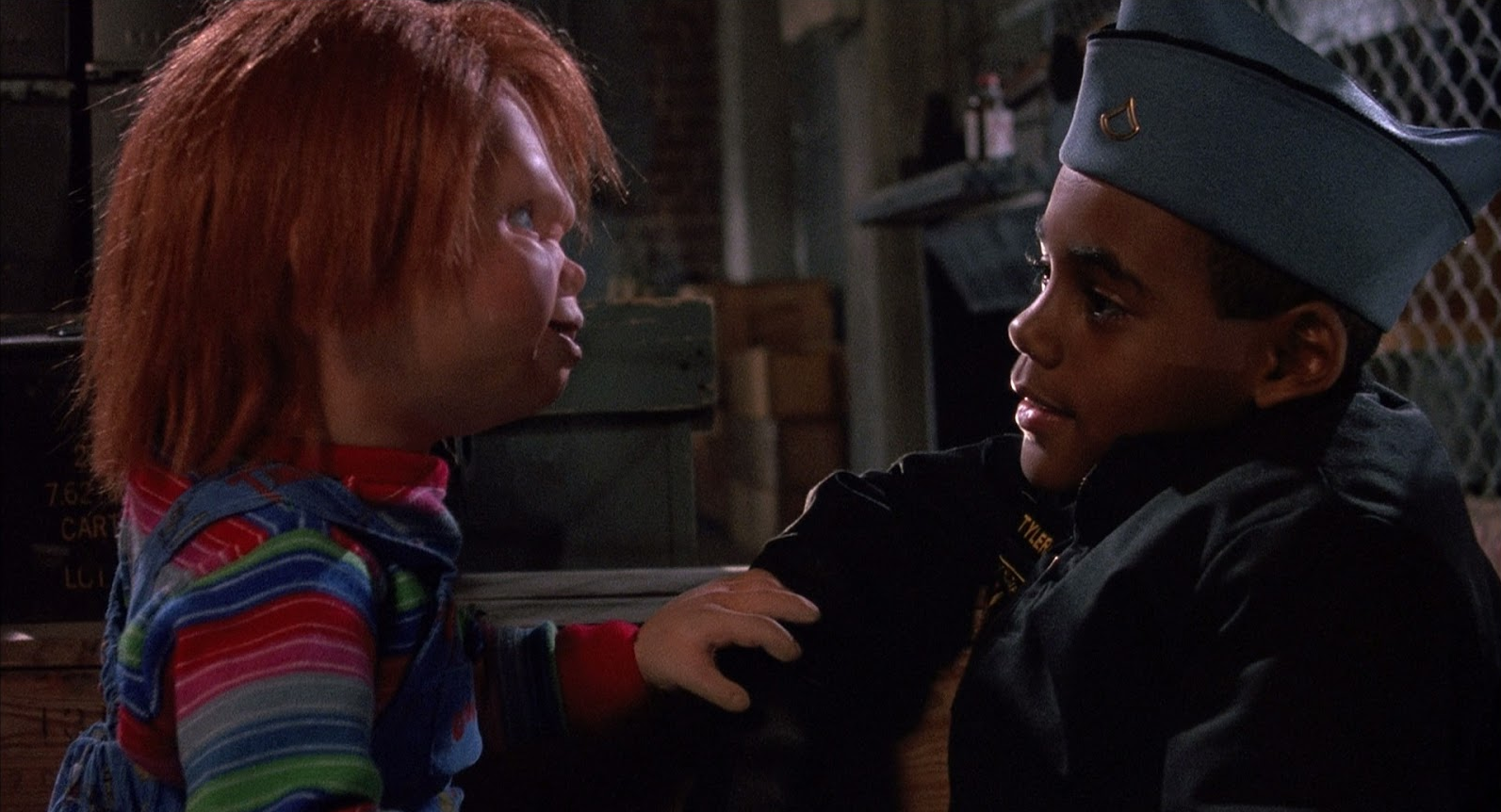
Bland and inoffensive, Child's Play 3 is the dumbest film in the series but it's far from being the worst.
30. Cult of Chucky (2017)
A sad ending to a sadistic series.
32. Seed of Chucky (2004)
It's dull, depraved, and almost entirely lacking in any merit outside of an almost insane sense of dedication on the part of the filmmakers to move forward with the bizarre direction the series had taken by this point.
31. Bride of Chucky (1998)
While not as dull as the film that followed it, Bride of Chucky may be the most vile, degenerate film I've ever sat through.
Well, that about wraps it up. Thanks for reading everyone!
_theatrical_poster.jpg)